


Buildings can reduce carbon emissions in this way: flexible energy use, low-carbon processes, green design, healthy environment, and intelligent operation and maintenance
Representatives from the School of Architecture of Tsinghua University, China Energy Construction Urban Investment and Development Co., Ltd. (hereinafter referred to as Energy Construction Urban Development) and other units recently launched a special discussion on the development trend of green technology housing, and the guests at the meeting believed that carbon neutrality and high-quality development in the construction field should follow the principles of flexible energy use, low-carbon process, green design, healthy environment, and intelligent operation and maintenance.
In November 2022, the Ministry of Science and Technology and the Ministry of Housing and Urban-Rural Development issued the "14th Five-Year Plan for Scientific and Technological Innovation in Urbanization and Urban Development", which pointed out that scientific and technological innovation in urbanization and urban development should be closely combined with the needs of China's urbanization process, with the purpose of meeting the people's growing needs for a better life, improving the scientific level of urban planning and construction and the level of intelligent urban operation, leading the low-carbon transformation of housing and urban-rural construction, promoting the sustainable development of cities and towns, and comprehensively supporting the construction of livable, innovative, smart, green, humanistic, Resilient cities.
Yang Xudong, a professor at Tsinghua University's School of Architecture, said that the main sources of building carbon emissions include: first, direct carbon emissions, carbon emissions caused by direct combustion of fossil energy, such as coal, gas, liquefied petroleum gas, etc., second, indirect carbon emissions, carbon emissions caused by the use of thermal power generation or combined heat and power heat, and third, embodied carbon emissions, carbon emissions caused by the production and transportation of building materials. He believes that in the future, the energy demand side of buildings should vigorously promote building energy conservation, continuously reduce energy demand, improve the conversion efficiency between electricity, heat and cold, reduce costs, and balance the contradiction between supply and demand through energy storage (electricity, heat and cold) and end-adjustable energy consumption.
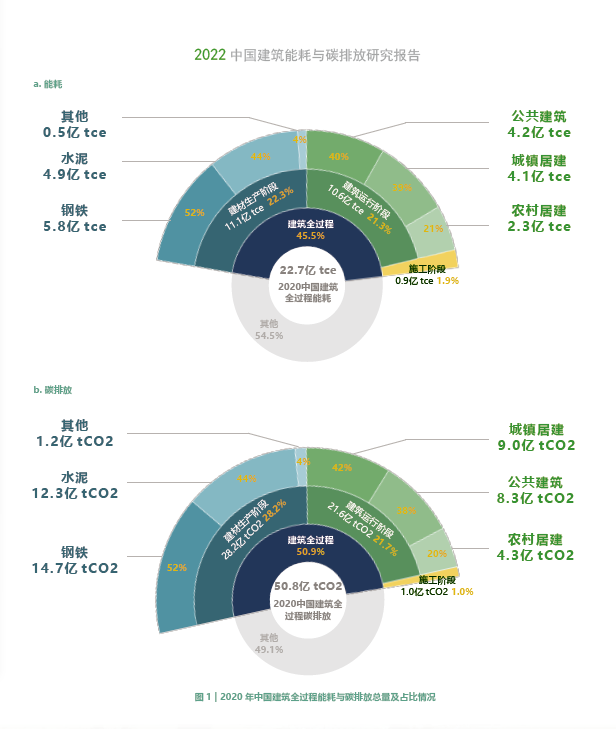
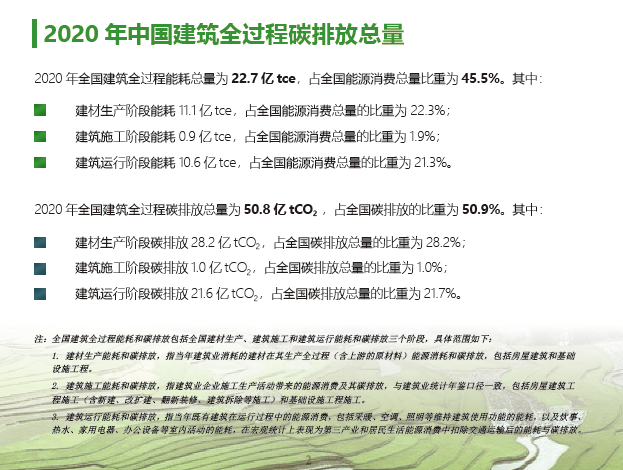
Photo courtesy of China Energy Construction City Investment and Development Co., Ltd. Yu Ao
"Flexible building energy consumption, low-carbon process, green design, healthy environment, and intelligent operation and maintenance can help achieve the goal of carbon reduction, energy conservation and high-quality development in China's construction field. Yang Xudong said that the flexibility of energy use is through the development and utilization of various cold, heat and electricity flexible resources in the building, to achieve flexible interaction with the power grid, the implementation of "light, storage, direct and flexible" new building is one of the important technical paths; Energy conservation and carbon reduction in the whole life cycle in the operation and demolition stages, multi-goal-oriented green building design methods are adopted in green design, environmental health is the use of a new generation of artificial environment control methods to create a comfortable and healthy living environment, and intelligent operation and maintenance is based on the actual operation data and physical characteristics of buildings, and advanced control concepts and technical means are introduced to achieve intelligent regulation and control with the goal of low-carbon and energy-saving.
It is understood that since the release of the above-mentioned plan, all localities have actively opened up a new track for urban construction and development with scientific and technological innovation around the development needs of livable urban functions, green and low-carbon, and smart humanities, and high-quality projects equipped with scientific and technological hard core have emerged one after another.
Taking Jianye District of Nanjing as an example, the strategic positioning of the international ecological low-carbon construction model area has been clarified in the overall land and space planning of the district. The 2023 Jianye District Government Work Report proposes to further improve the construction standards of new residential buildings, support the construction of "Liuheng" residences in G29 and other projects in Hexi Province, and build a smart and healthy "future community" in the Ao Nang area, and continue to build a benchmark area for high-quality residential buildings and high-quality communities in Nanjing.
Qin Shulan, general manager of the Nanjing Business Department of Energy Construction and Urban Development, introduced that Zhongning Mansion (Hexi G29 project) focuses on promoting key technologies such as green buildings and low carbon emissions, relying on the R&D and innovation advantages of "green +", "energy +" and "digital intelligence +", to create a high-quality, comfortable and healthy technology residence carbon emission intensity will be reduced by more than 12% on the basis of the General Code for Building Energy Conservation and Renewable Energy Utilization. In terms of renewable energy application, the project realizes 100% of winter heating heat sources, 100% domestic hot water, 75% of summer air conditioning cold sources using ground source heat pumps, and 100% of buildings are equipped with distributed solar photovoltaic power generation systems.
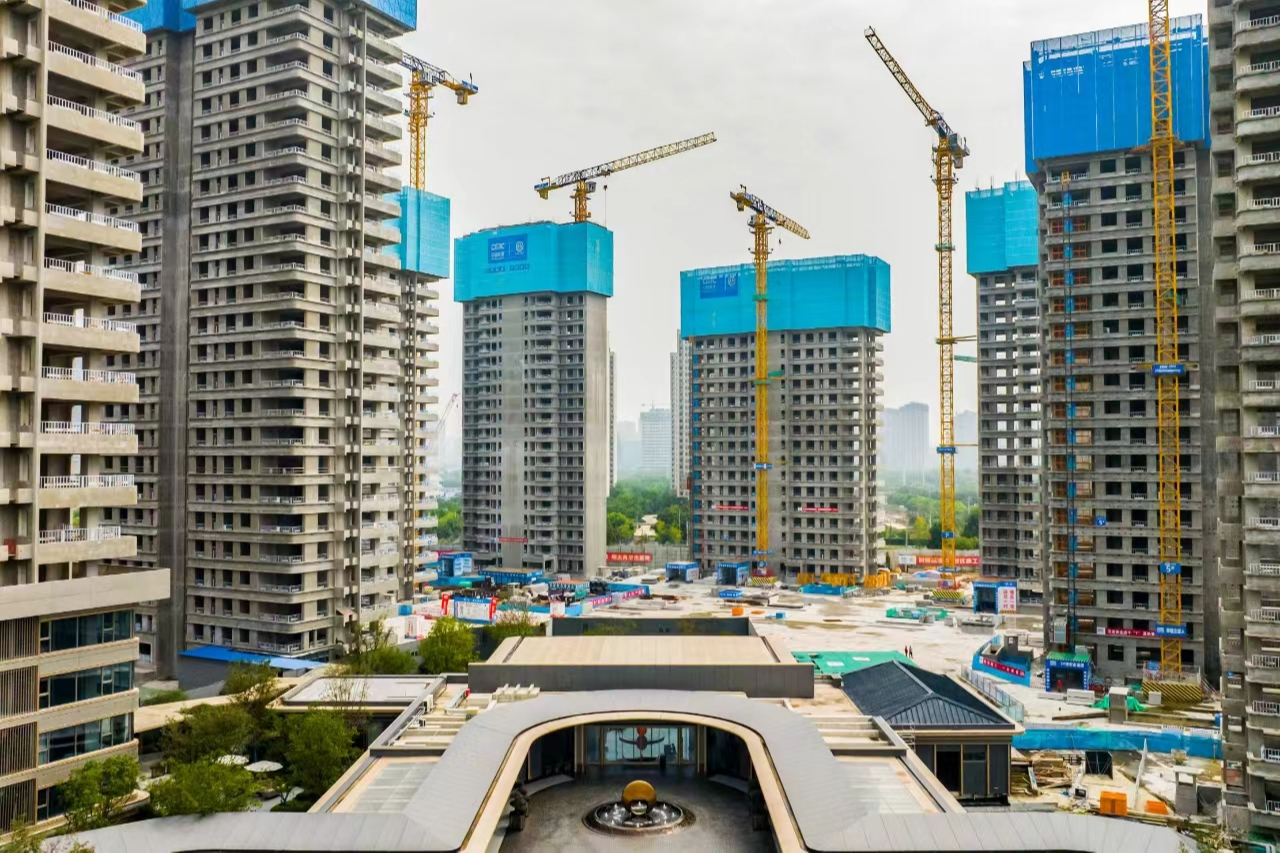
Photo courtesy of China Energy Construction City Investment and Development Co., Ltd. Yu Ao
The reporter learned that building and industry, transportation is the three main areas of energy consumption in China, China's building materials production, construction energy consumption, living energy, heating and air conditioning and other building energy consumption accounts for about 1/3 of the total energy consumption of the whole society, the construction industry carbon dioxide emissions account for more than 40% of the country's overall carbon emissions, and the energy consumption in the operation process accounts for 70% of the building energy consumption. The construction industry has great potential for carbon reduction, and there is a long way to go to transform the development model of the construction sector, promote green buildings, build eco-cities, effectively implement energy conservation and emission reduction, and respond to climate change.


