


Su Wei: How can green and low-carbon transformation provide new momentum for high-quality development?
On January 7, 2024, the 25th Peking University Guanghua New Year Forum was held at the Centennial Lecture Hall of Peking University, with the theme of "Growth Momentum, China Exploration". Su Wei, former Deputy Secretary-General of the National Development and Reform Commission (NDRC) and Chief Representative of China's Climate Negotiations, attended the forum and delivered a keynote speech.
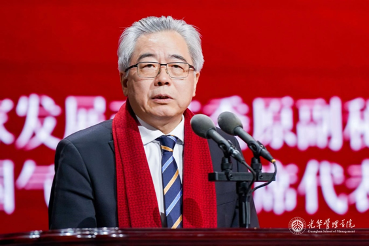
"Achieving carbon peak and carbon neutrality is a broad and profound economic and social systemic change, the core is the comprehensive green transformation of economic and social development, the key is the green and low-carbon development of energy, and the way is to accelerate the formation of an industrial structure, production mode, lifestyle, and spatial pattern that conserves resources and protects the environment, which will also provide new momentum for promoting the high-quality development of ecological priority, green and low-carbon, and realizing the modernization of harmonious coexistence between man and nature. Su Wei said that how to give full play to the potential and role of these new kinetic energy, the focus is to do ten things well.
First, green and low-carbon energy development. Based on the basic national conditions of coal-based, the gradual withdrawal of traditional energy should be based on the safe and reliable substitution of new energy. Intensify efforts to plan and build a new energy supply and consumption system based on large-scale wind and photovoltaic bases, supported by clean, efficient, advanced and energy-saving coal-fired power around them, and supported by stable, safe and reliable ultra-high voltage transmission and transformation lines. Strictly and reasonably control the growth of coal consumption, continue to promote the clean and efficient use of coal, coordinate hydropower development and ecological protection, actively develop nuclear power in a safe and orderly manner, and strengthen the construction of energy production, supply, storage and marketing systems to ensure energy security.
The second is energy saving, carbon reduction and efficiency improvement. Implement the policy of giving priority to conservation, promote the revolution of energy consumption, and build an energy-saving society. Improve the regulation and control of total energy consumption and intensity, and focus on controlling fossil energy consumption. Deepen energy conservation and efficiency improvement in key areas such as industry, urban and rural areas, transportation, agriculture and rural areas, and public institutions, implement key projects for energy conservation and carbon reduction, carry out energy conservation and carbon reduction transformation, and effectively improve the efficiency of energy and resource utilization. Promote energy conservation and efficiency improvement of key energy-using equipment, comprehensively improve energy efficiency standards, and promote advanced and efficient products and equipment.
The third is industrial optimization and upgrading. Accelerate the construction of a green and low-carbon modern industrial system, and promote low-carbon economic growth. Vigorously develop strategic emerging industries, promote the deep integration of emerging technologies such as the Internet, big data, artificial intelligence, and fifth-generation mobile communications with green and low-carbon industries, build a green manufacturing system and service system, vigorously promote the energy-saving and carbon-reduction transformation of traditional industries such as steel, nonferrous metals, petrochemicals, chemicals, and building materials, and accelerate the innovation and digital transformation of low-carbon processes in the industrial field.
Fourth, green and low-carbon transportation. Vigorously promote new energy vehicles, speed up the renewal and transformation of old ships, and further promote the use of shore power when ships call at ports. Develop intelligent transportation, carry out green upgrading and transformation of transportation infrastructure, orderly promote the construction of infrastructure such as charging piles and supporting power grids, and create a fast and comfortable urban public transportation service system.
Fifth, urban and rural construction is green and low-carbon. Promote energy-saving renovation of existing buildings, strict green building standards, promote energy-saving and low-carbon technologies, and accelerate the improvement of building energy efficiency. Optimize the energy consumption structure of buildings, promote the application of renewable energy such as photovoltaic power generation and building integration, and improve the level of electrification of building terminals. Promote rural construction and low-carbon transformation of energy consumption, and strengthen the construction of rural power grids.
Sixth, the development of circular economy. Promote the conservation and intensive utilization of all kinds of resources, and comprehensively improve the efficiency of resource utilization. Carry out the recycling transformation of the park, accelerate the demonstration construction of comprehensive utilization of bulk solid waste, and improve the level and efficiency of comprehensive development and utilization of mineral resources. Accelerate the construction of a waste recycling system and promote the reduction and recycling of domestic waste.
Seventh, green and low-carbon technological innovation. We will further strengthen innovation capacity building, promote applied basic research in the field of "dual carbon", and carry out research on key core technologies that are low-carbon, zero-carbon and carbon-negative. Focus on the green and intelligent development of fossil energy and clean and low-carbon utilization, large-scale utilization of renewable energy, energy storage, carbon dioxide capture, utilization and storage, accelerate the research and development, promotion and application of advanced and applicable technologies, and improve technology and product testing, evaluation and certification systems.
Eighth, ecosystem carbon sinks. Accelerate the implementation of major projects for the protection and restoration of important ecosystems. Scientifically carry out large-scale land greening actions, and strengthen the protection of forests, grasslands, rivers and lakes, and wetlands. Strengthen ecosystem investigation and monitoring, and study the establishment of an ecosystem carbon sink monitoring and accounting system. Vigorously develop green, low-carbon and circular agriculture, and promote carbon emission reduction and carbon sequestration in agriculture and rural areas.
Ninth, green and low-carbon policies. Promote the dual control of energy consumption and gradually shift to the dual control of total carbon emissions and intensity. Improve the statistical accounting system for carbon emissions. Improve the fiscal, tax, financial, investment, and price policies and standard systems that support green development, and effectively stimulate market vitality. Give full play to the role of the market mechanism, improve the market-oriented allocation system of resources and environmental factors, improve the carbon emission market trading system, and improve the carbon pricing mechanism.
10. Global climate governance. We will promote the building of a fair, reasonable, and win-win global climate governance system, advance important multilateral processes such as the United Nations Framework Convention on Climate Change, and strengthen the effective implementation of the Convention and the Paris Agreement. We will carry out green economic, trade, technological and financial cooperation, accelerate the green Belt and Road Initiative, and support the green and low-carbon energy transformation of developing countries.


