


Can we build wetlands once and for all?丨Ecological and environmental experts travel to the Yellow River
In the Yangliuqiao wetland in the pagoda district of Yan'an, Shaanxi, calamus lies crookedly. A few days ago, there had just been a snowfall in Yan'an, and the snowflakes had overwhelmed these plants with strong roots, and there was still a small pile of snow at the bottom of them. It is now the season of harvesting calamus, and when the reporter followed the research team of the National Yellow River Center "Ecological and Environmental Experts on the Yellow River" to the scene, he saw two workers harvesting operations.
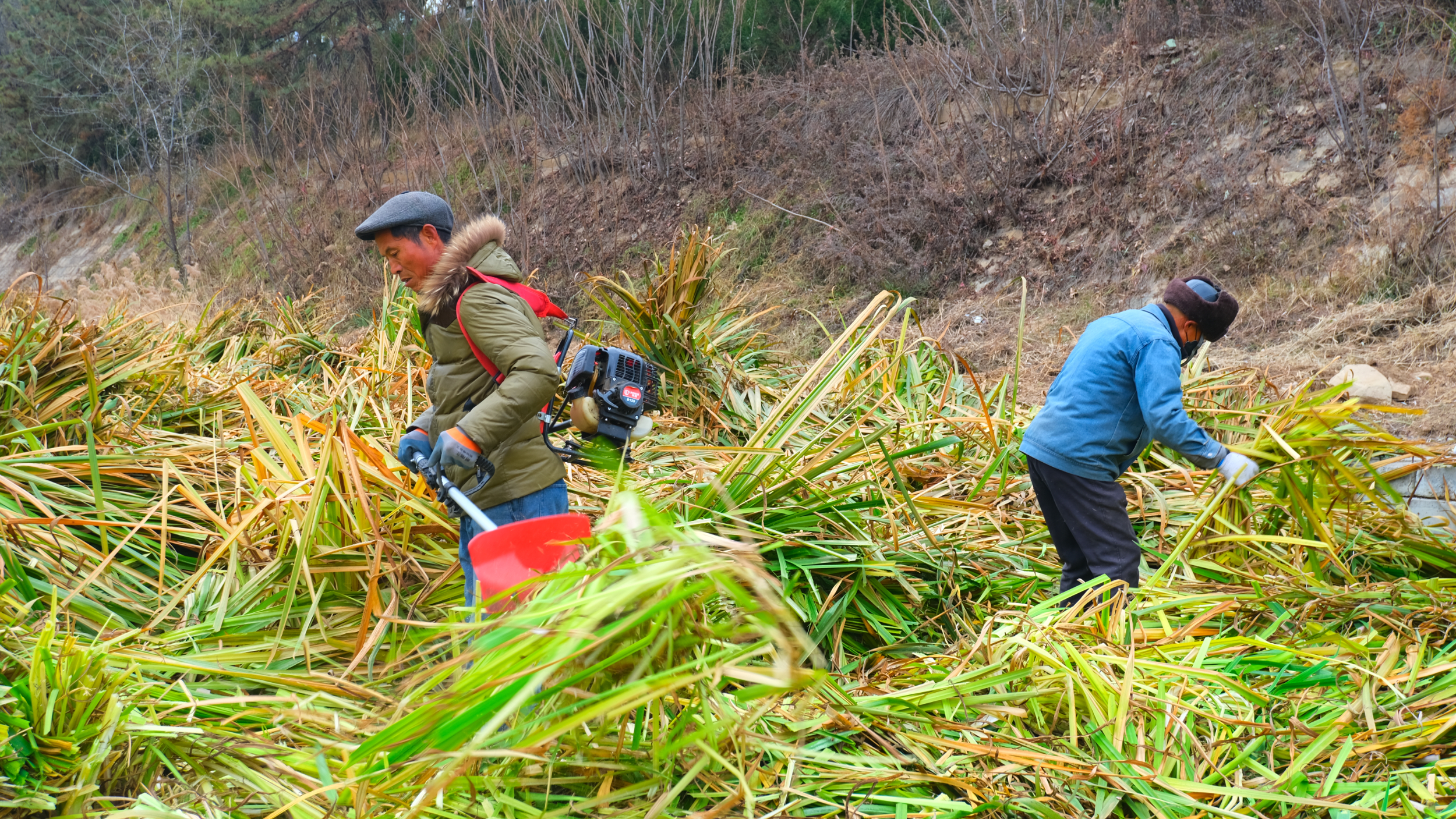
The picture shows the staff harvesting calamus
"Look, we only planted one seedling, and it grew into such a big piece. One of the workers who was harvesting the skin pointed to a calamus and told reporters. The calamus is half a meter in diameter, and its erect leaves have been cut off, leaving a single root firmly gripping the earth. "In the past, the water in the Yanhe River near here was very dirty, but after the past few years, it has been much better, and now there are hundreds of wild ducks, frogs and snakes in the river. He said.
Yangliuqiao Wetland is one of the ecological protection and restoration projects of mountains, rivers, forests, fields and lakes in Yan'an Baota District, and its construction is mainly used to further purify the drainage of Yan'an Sewage Treatment Plant to meet the surface water discharge standards. According to the operation and maintenance personnel of Yangliuqiao Wetland, Yangliuqiao Wetland was completed in 2019, and the construction scope is the section from Yangliuqiao to Zhujiagou on the Yanhe River. The wetland adopts the horizontal undercurrent artificial wetland restoration process, the upper layer is planted with calamus, iris and other plants to absorb nutrients such as nitrogen and phosphorus, and the lower layer is artificial media such as gravel, slag or sand layer, so as to achieve water filtration and purification through the method of "physical + biological". During the operation of the wetland, the surrounding water ecological environment has been improved, fish, frogs and other aquatic animals have increased, and the wetland has also realized the reuse of reclaimed water for urban greening and fire fighting.
With the effect of wetland sewage treatment appearing, the construction of wetlands is over? In the daily maintenance of wetlands, in addition to inspection and maintenance, water volume adjustment, etc., the maintenance and harvesting of plants is a key to wetland operation. "Wetland plants need to be managed, because these plants absorb organic matter such as nitrogen and phosphorus in sewage and sediment, and if they are not managed or harvested, they will rot, and the organic matter and nutrients they decompose will return to the wetland," said Sun Dezhi, an expert from the National Yellow River Center and a professor at Beijing Forestry University. ”
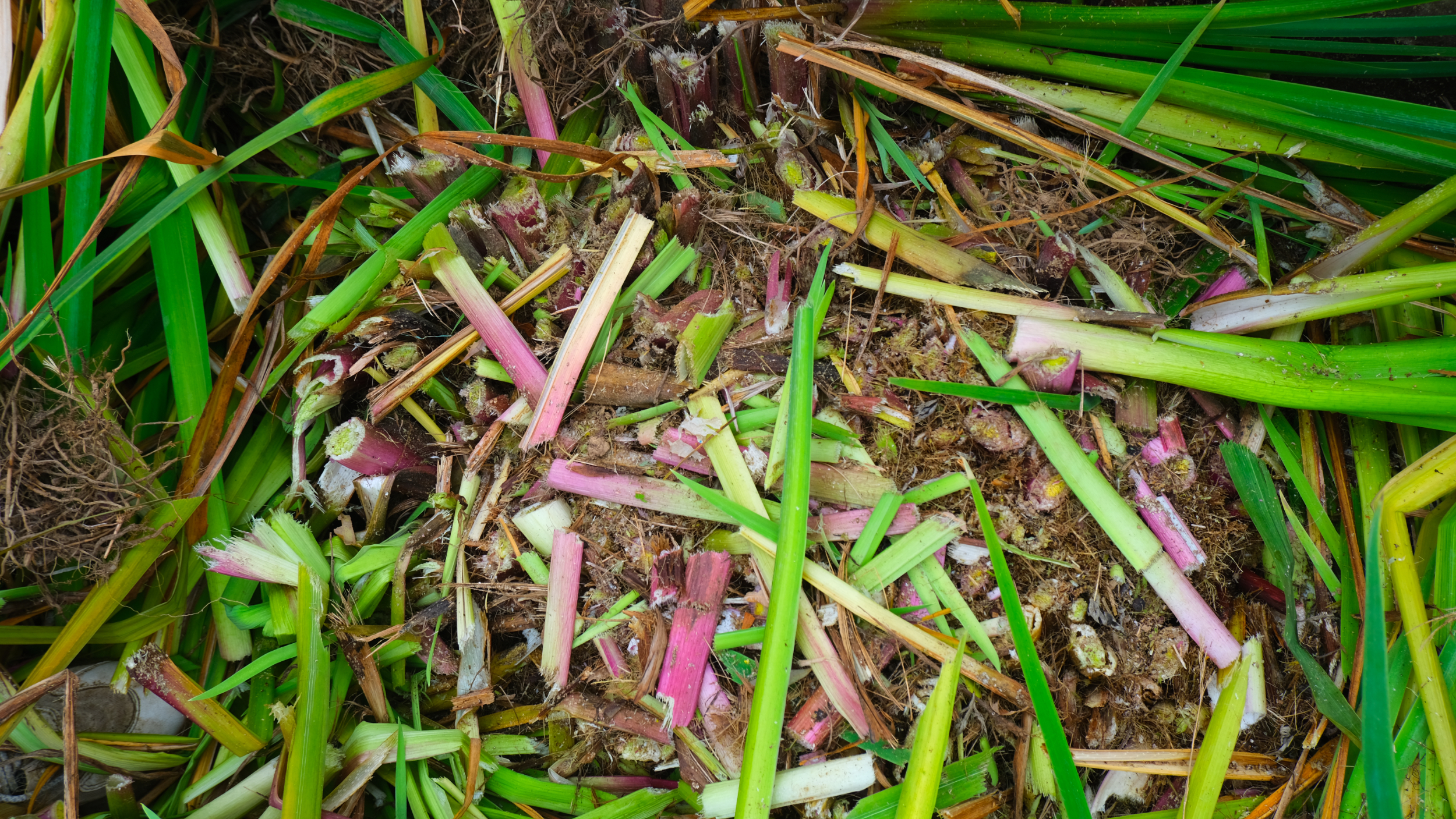
The photo shows the root of an iris with the upper leaf cut off
Generally speaking, wetland plants are used as fodder and fertilizer for the production of biogas and as industrial raw materials for daily necessities. However, the exact approach to be adopted depends on the local conditions and the biological characteristics of the wetland plants. The size of the wetland, the local industry, the hardness of the wetland plants, the water content and other biological characteristics should all be considered in the choice of treatment.
According to the on-site operation and maintenance personnel of Yan'an Qintai Wetland Project Management Co., Ltd., the plants currently harvested are mainly used for incineration power generation and livestock breeding, of which incineration power generation accounts for about 80% of the total. Although two solutions have been proposed in Yangliuqiao Wetland, neither treatment method can form a long-term mechanism for plant treatment in Yangliuqiao Wetland. The main problem with incineration for power generation is that the calorific value of plants burned alone is too low, and the power generation efficiency is low, so the plants can only be mixed with coal and burned, which puts further demands on the process of the charcoal furnace, which is not cost-effective for power plants, and the way livestock are fed is very limited. As a result, the operators of Yangliu Wetland are still looking for a better way to solve the problem of post-harvest disposal of wetland plants.
Song Yonghui, deputy director of the National Yellow River Center and chief scientist of the Chinese Academy of Environmental Sciences, believes that the problem with the treatment of wetland plants in the Yangliuqiao wetland is that the wetland is too small to form a sustainable ecological industry. "If we can concentrate all the local wetland plants, it may be more conducive to promoting related industries and finding appropriate treatment methods after scale. Song Yonghui added: "I think we can learn from the practice of ecological industrialization in Wuliangsuhai in Inner Mongolia and process wetland plants into plates. On the one hand, it is a high-value way to use, on the other hand, making it produces relatively low carbon emissions, and it can save forest resources, which can be said to kill two birds with one stone. ”
"Building wetlands is only the first step, and there is still a long way to go for wetlands to be maintained and operated in the later stage. Professor Wang Hongqi of Beijing Normal University, a specially invited expert of the National Yellow River Center, said.


