


COP28 themed side event "China's Policies and Actions on Climate Change" was held
A side event on the theme of "China's Policies and Actions on Climate Change" was recently held at the China Corner of COP28 in Dubai. The side event was co-hosted by the Policy Research Center for Environment and Economy of the Ministry of Ecology and Environment, the NRDC and the Environmental Defense Fund (EDF). Experts and scholars from ecological and environmental departments, international organizations and environmental protection organizations attended the meeting.
The relevant person in charge of the Policy Research Center for Environment and Economy of the Ministry of Ecology and Environment introduced the phased results of the climate governance observation and research project being carried out by the Center and NRDC. He pointed out that in the past 10 years, China has been working hard to promote carbon reduction, pollution reduction, green expansion and growth, and promote green and low-carbon transformation of the economy and society. Green and low-carbon transition requires the joint efforts of different actors, including the government, enterprises, the public and social organizations, that is, pluralistic governance. In the next step to promote green and low-carbon diversified governance, it is necessary to establish and improve a green and low-carbon transformation governance system with multi-objective coordination, central and local coordination, departmental coordination and regional coordination, give full play to the guiding role of fiscal, tax and financial policies and the role of various trading markets in optimizing resource allocation, establish and improve the constraints and incentive system for green and low-carbon transformation of enterprises, further improve the participation mechanism of the public and social organizations, and take multiple measures to enhance the ability to promote green and low-carbon transformation.
Zhang Jieqing, Chief Representative of NRDC Beijing Representative Office, moderated the discussion session of the side event. The guests exchanged views on how to build a pluralistic governance system with the participation of the government, enterprises, the public and social organizations on topics such as institutional and legal construction, policy formulation and local practice of climate governance.
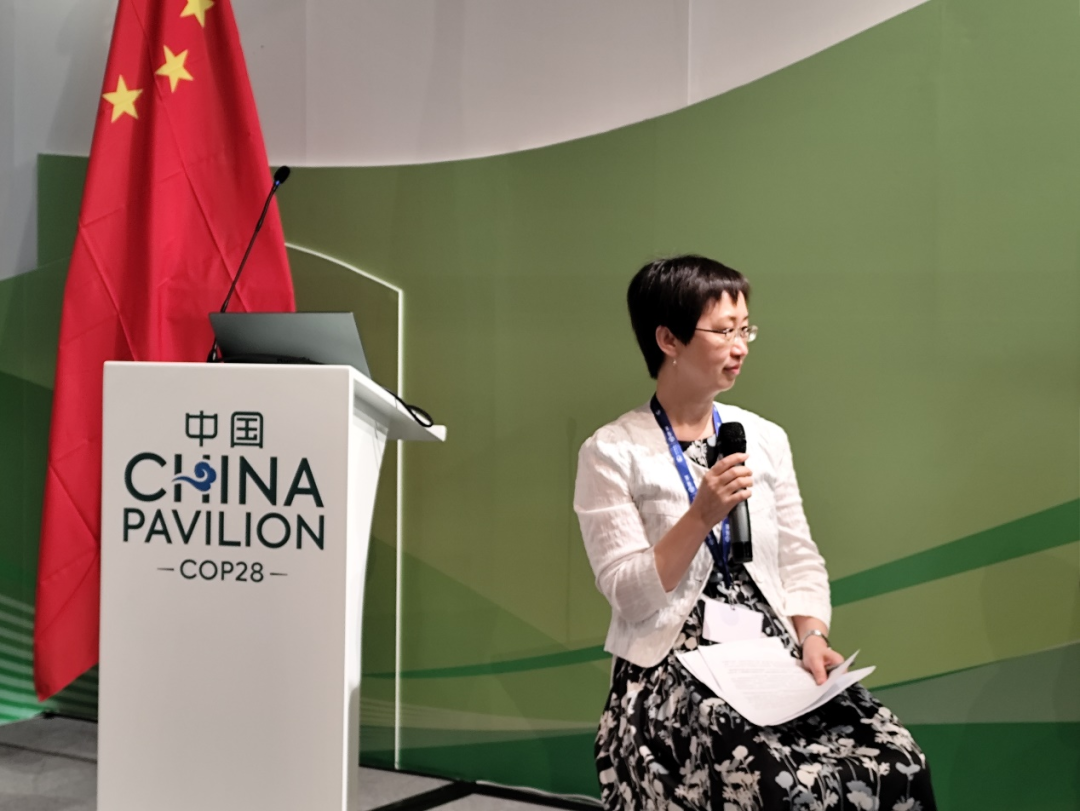
The picture shows Zhang Jieqing presiding over the side discussion.
Zhang Jieqing said that tackling climate change is a global and long-term task, which cannot be achieved overnight, but needs to be done gradually. At present, global climate governance has gradually formed an institutional system dominated by the United Nations Framework Convention on Climate Change (UNFCCC) and its framework, the Kyoto Protocol and the Paris Agreement, and a bottom-up NDC emission reduction model has been established. An effective climate governance system can ensure that the process of addressing climate change is fair, stable and sustainable. The United Nations Climate Change Conference (COP) is a key platform for advancing climate governance at the global level. "We expect the Dubai COP to vigorously promote climate governance in terms of policy consultation, technical cooperation and financial support. Domestically, it is necessary for all parties, including central and local governments, enterprises, social organizations and the public, to work together to actively participate in climate action. ”
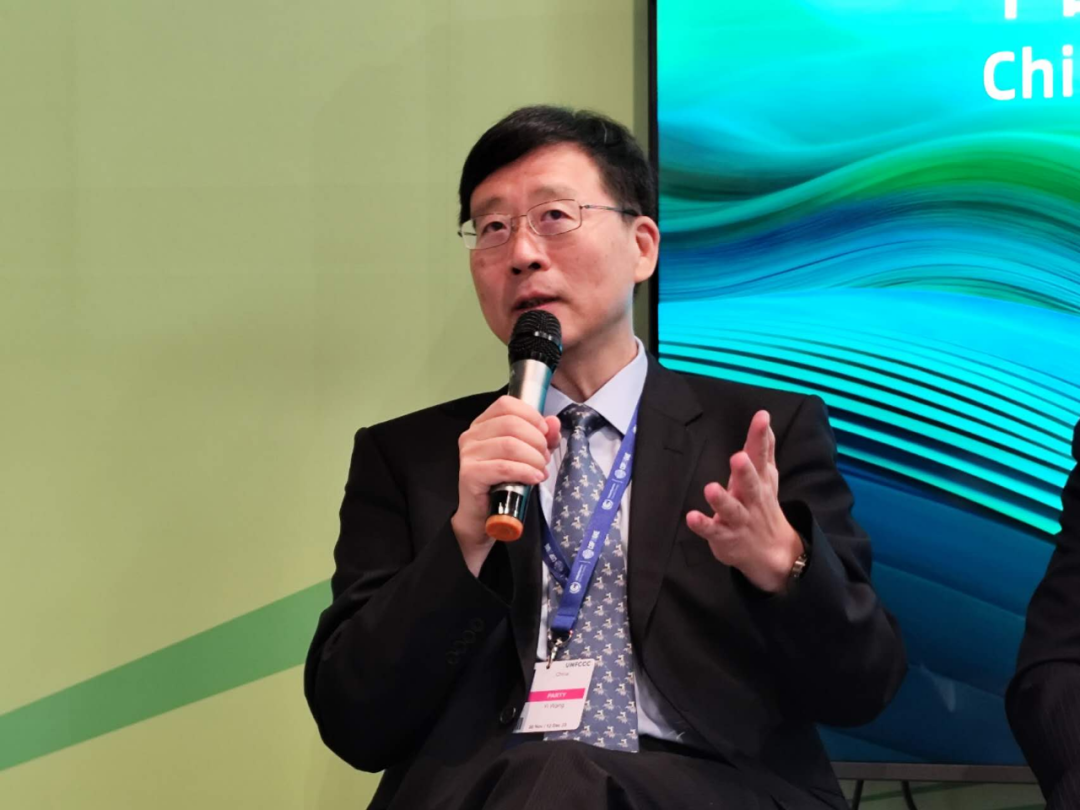
The picture shows Wang Yi speaking.
Wang Yi, deputy director of the National Climate Change Expert Committee and a researcher at the Chinese Academy of Sciences' Institute of Science and Technology Strategy Consulting, pointed out that China needs a clearer system and a better combination of ambitious goals and pragmatic actions to find the best way to achieve a rapid solution to the climate problem.
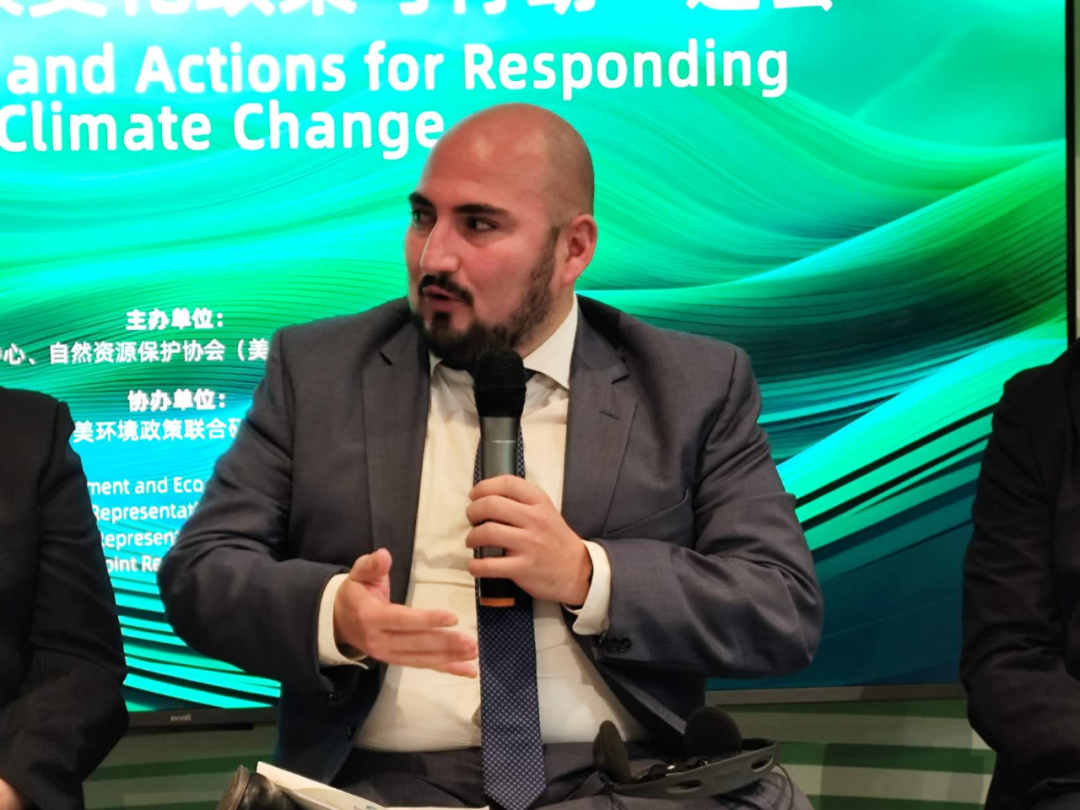
Juan Pablo Hoffmaister speaks.
Juan Pablo Hoffmaister, Vice President of Global Climate Engagement at EDF, said that international cooperation is essential to achieving the goals of the landmark Paris Agreement.

The picture shows Jia Qiumiao speaking.
Jia Qiumiao, deputy director of the Beijing Municipal Center for Climate Change Management, said that in recent years, Beijing has formulated and implemented a green Beijing development strategy, coordinated the promotion of synergy in pollution reduction and carbon reduction, optimized and adjusted the industrial structure, continued to promote the clean and efficient use of energy, and did a good job in policy coordination, making historic breakthroughs in environmental quality improvement, and the total carbon emissions are in a stable plateau.
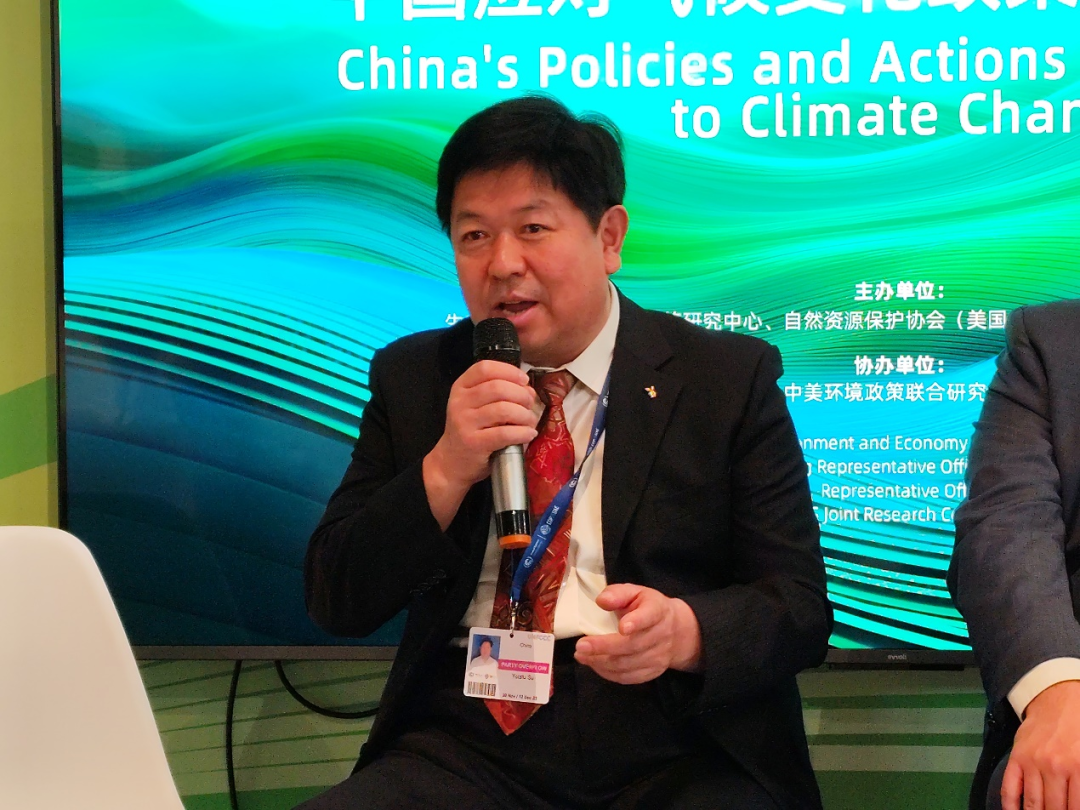
The picture shows Suyaratu speaking.
Su Yalatu, director of the Inner Mongolia Ordos Municipal Bureau of Ecology and Environment, said that Ordos has vigorously carried out green and low-carbon energy transformation, promoted desertification control, and improved ecosystem carbon sinks. In the next step, we will enhance our ability to adapt to and respond to climate change through pilot activities such as synergy of pollution reduction and carbon reduction, zero-waste cities, and regional reclaimed water recycling, and continue to make Ordos contributions to global sustainable development.
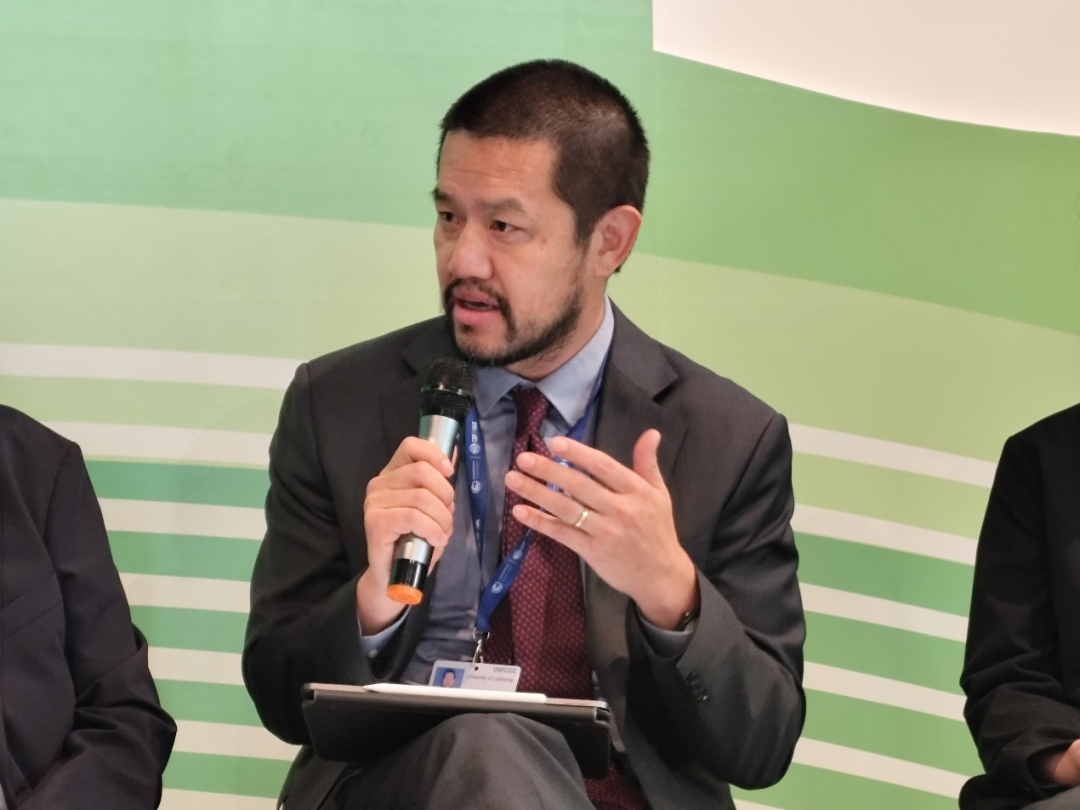
The picture shows Wang Lide speaking.
Alex Wang, a professor at UCLA School of Law and co-director of the Emmett Institute for Climate Change and the Environment, pointed out that climate change and governance require effective institutional construction. For example, a well-designed carbon trading system can have a positive effect on reducing emissions. The system design should comprehensively consider the impact and synergy between various pollutants, and improve the supervision mechanism and information disclosure mechanism. China is building an emissions trading system and will restart CCER in the near future, and it is expected that these developments will lead to an effective carbon reduction mechanism based on the carbon market.
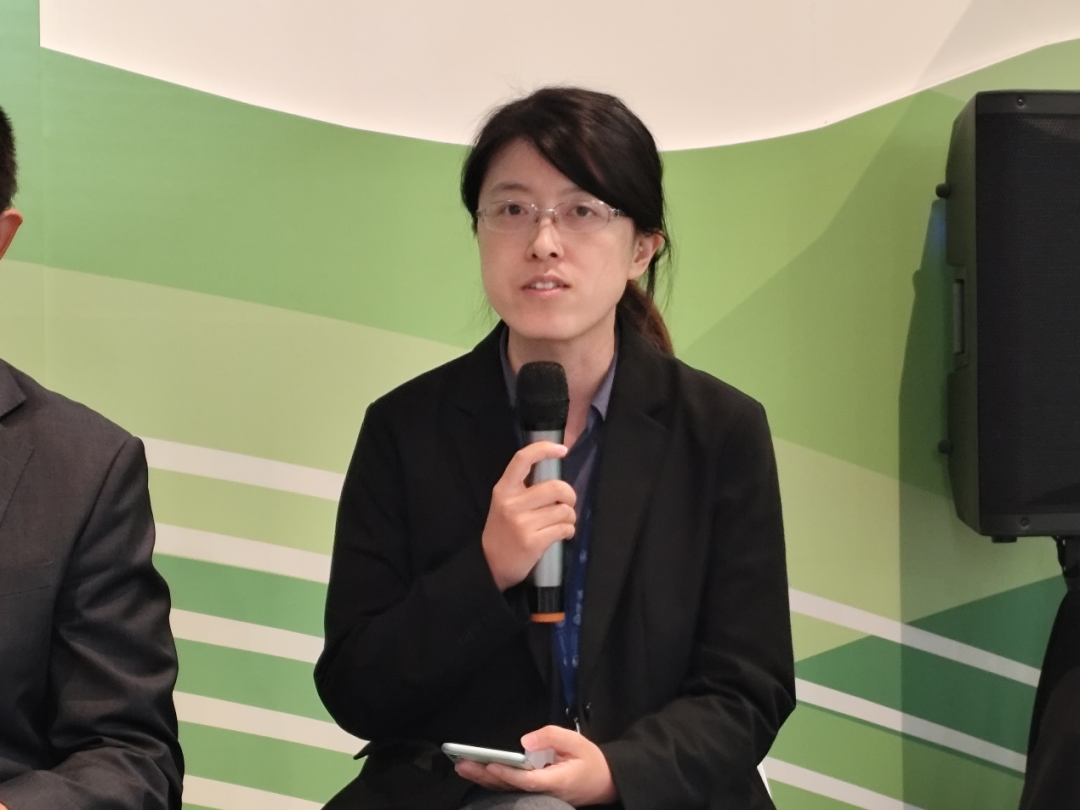
The picture shows Guo Hongyu speaking.
Guo Hongyu, deputy director of the Beijing Green Research Public Welfare Development Center, said that in the face of the increasingly severe global economic and climate situation, social organizations should cooperate extensively to help governments and enterprises identify problems, learn from international experience to solve practical problems, and jointly address climate change.


