


Fight a national war to achieve the "dual carbon" goal, boost climate ambition and promote high-quality development academic seminar and book launch were held
"To achieve the 'double carbon' goal, we must not just stay in the slogan and planning, but also need to carry out macro-level co-ordination, adapt measures to local conditions, and coordinate the industry in time and step by step, and must not abandon the future development prospects because of temporary stability." Liu Yanhua, Honorary Director of the National Climate Change Expert Committee and former Vice Minister of the Ministry of Science and Technology, emphasized at the academic seminar on boosting climate ambition and promoting high-quality development and the book launch of "China's Carbon Neutrality Goal Connotation and Path Selection", "Beijing Carbon Neutrality 2050: Economic, Social and Energy Comprehensive Transformation Path and Policy Orientation", and "County Contribution and Strategic Path of Carbon Neutrality - A Case Study of Carbon Neutrality 2035 in Xingshan County, Hubei Province".
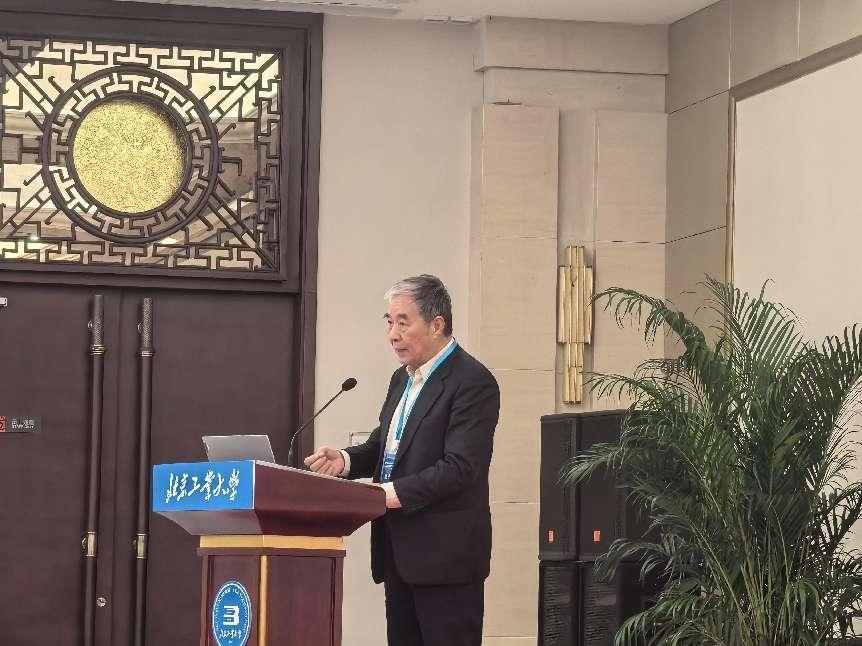
Liu Yanhua, former vice minister of the Ministry of Science and Technology, delivered a keynote speech
Experts and scholars from the Standing Committee of the National People's Congress, the Ministry of Ecology and Environment, the Chinese Academy of Social Sciences, Peking University, Beijing University of Technology and other departments and research institutes attended the meeting and conducted in-depth discussions on the goals, challenges, policies and practices of carbon neutrality.
The energy transition presents a wealth of opportunities
On December 13, the 28th Conference of the Parties to the United Nations Framework Convention on Climate Change (UNFCCC) in Dubai, United Arab Emirates, came to an end after lengthy negotiations, with governments around the world pledging to "transition away from fossil fuels".
Fossil energy has played an important role in the development of human civilization and the process of development, why must we leave fossil energy? Yang Fuqiang, senior advisor of the Energy Research Institute of Peking University, shared his views at the meeting: fossil energy has a certain impact on air quality and economic development, urbanization and industrialization have been in the late stage, and they have the strength to get rid of dependence on fossil energy consumption.
Liu Qiang, deputy chief representative of the Children's Investment Fund (CIFF) in China, believes that the realization of energy transition will bring a lot of opportunities to China, for example, the troika of our current economic development - photovoltaics, electric vehicles, and energy storage, are all green and low-carbon energy industries. Getting rid of dependence on fossil energy consumption can also bring about the development of many industrial chains and upstream and downstream industries. What is China's future industrial competitive advantage in the world? It may not only be reflected in a few industries, but in the entire industrial chain. In terms of the industrial chain, we already have a strong advantage, and how to maintain this advantage in the future requires us to move in the direction of green and low-carbon as soon as possible, especially to achieve green and low-carbon energy transformation.
Energy transition risks need to be vigilant
Carbon neutrality will lead to disruptive changes in the entire energy system and industrial system, with both opportunities and challenges. Chen Hongbo, deputy dean and professor of the School of Applied Economics at the University of Chinese Academy of Social Sciences, believes that transition risks are worth paying attention to. In response to climate change, we have introduced a number of policies to promote the development of low-carbon industries, and with the rapid development of policy guidance and renewable energy technologies, the preferences of consumers and investors have changed, and traditional high-carbon industrial technologies will be gradually replaced and eliminated. For example, as the number of fuel vehicles continues to decrease, gas stations and oil pipeline networks will be eliminated, resulting in a large number of stranded assets, which will become a risk in the future. At present, our understanding of the risks caused by climate change is far from sufficient, and it is time to fully understand the risks, especially financial risks, and respond to them as soon as possible.
Liu Yu, a professor at the School of Urban and Environmental Sciences of Peking University, a distinguished professor at Peking University, and a winner of the National Science Fund for Distinguished Young Scholars, stressed that energy security should also be considered, blindly promoting renewable energy on a large scale, and in the case of our energy storage system is not perfect, if there are sudden weather extreme events, it may affect the security of energy supply in the short term, and we must grasp the rhythm and intensity of promoting the transformation of the energy structure.
Achieving carbon neutrality requires a system layout
Achieving the goal of carbon neutrality is a broad and profound economic and social systemic change, which cannot be achieved easily, and needs to be incorporated into the overall layout of economic and social development and ecological civilization construction. In the face of the huge pressure of energy transition, Liu Qiang stressed that it is necessary to establish first and then break down, and have a systematic solution to replace fossil energy. At the same time, the support of policies, the cooperation of the power grid, and the support of finance are also very crucial.
Huang Jing, director of China's Agenda 21 Management Center, member of the National Climate Change Expert Committee, and member of the United Nations Energy Transition Advisory Committee, believes that to achieve the goal of carbon neutrality, markets, policies, and technologies need to be continuously integrated and coordinated. At the policy level, laws and regulations, green finance, carbon tax and other policies and systems provide institutional guarantees for achieving carbon neutrality, and also have an incentive effect on low-carbon technology innovation. At the market level, establish and improve the carbon trading mechanism, promote enterprises to incorporate green and low-carbon into production decision-making through the invisible hand of the market, and guide enterprises to increase the research and development and application of low-carbon technologies. At the technical level, scientific and technological innovation will play an irreplaceable role, and major technological breakthroughs and even disruptive technological innovations are needed in some fields. The greater the intersection of market, policy, and technology, the more significant the role of science and technology, and the greater the possibility of "making the impossible possible".
Liu Yanhua emphasized that the establishment of green energy and a new economic and social system is a reborn reform. It is necessary to aim at the future development direction, deploy in advance, cultivate green development leaders, top-notch talents and high-level teams, let endogenous power be formed at different levels, fight a national war to achieve the "double carbon" goal, and let the efforts be rewarded in the market.


