


Chairman of Rio Tinto China: I don't want to just sell ore 30. Foreign companies × CBN
This is the sixth time that Rio Tinto has participated in the CIIE, and the global mining giant is celebrating its 150th birthday this year.
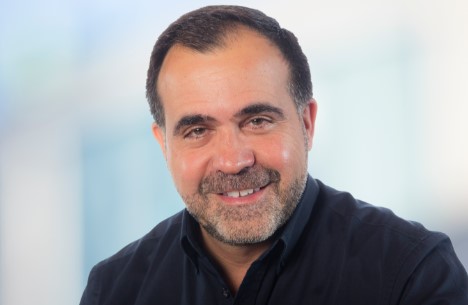
"In many ways, China's success is Rio Tinto's success, and the Chinese market is very important to us." In a recent interview with the first financial reporter, Alf Barrios, chief commercial officer and chairman of Rio Tinto Group, said this.
Despite its headquarters in London, Rio Tinto's largest single shareholder today is Chinalco, a Chinese company that accounts for more than half of Rio Tinto's revenues and is an important source of business partners, talent and technology.
From ore trading to joint venture development
More than 120 years ago, Rio Tinto first supplied borates from California to China, opening up trade with China. In 1973, Rio Tinto became the first company to ship iron ore to China, which was destined for Shanghai No. 1 Iron and Steel Plant, now part of the Baowu Group.
"To date, we have provided more than 3.5 billion tonnes of high-quality iron ore and other important metal minerals to China, supporting China's industrialization and modernization," said Bai. ”
As the world's largest steel-producing country, China has a huge demand for iron ore, a raw material for steelmaking, and high-grade iron ore from Australia, which is relatively close to China, has also become the first choice for raw materials for Chinese steel mills.
In recent years, in addition to supplying iron ore raw materials to Chinese steel mills, Rio Tinto has also formed joint ventures with a number of Chinese companies to jointly develop Australia's mineral resources.
As early as 1987, Rio Tinto and Sinosteel established a joint venture with Sinosteel in Western Australia, building China's first major overseas mineral resources investment project.
Last year, Rio Tinto entered into a partnership with Baowu Group to establish a joint venture to jointly develop the Pilbara West Slope Iron Ore Mine in Australia, with a total investment of about US$2 billion. The company also works with partners such as Baowu and Chinalco to develop high-grade iron ore resources in Simandou, Guinea.
New opportunities in the low-carbon transition
"Currently, Rio Tinto has a low-carbon transition at the heart of its strategy, with plans to achieve net-zero emissions from our operations by 2050 and a commitment to invest US$7.5 billion in emissions reduction projects by 2030." "We are building 1,000 megawatts of solar and wind energy in the Pilbara region of Western Australia, which will generate about seven times as much electricity as the largest solar power plant in the region," Bai Ruiming told CBN. ”
Such a strategic transformation has also given Rio Tinto a new direction for its development in the Chinese market.
"At this year's CIIE, Rio Tinto will continue to showcase its core product portfolio, including iron, aluminum, copper and other metal minerals, and will also showcase for the first time the company's cutting-edge applications in advancing the decarbonization of the industry value chain.
BioIron, for example, uses biomass instead of coking coal as a reducing agent in the steel smelting process, including agricultural by-products such as wheat straw, rape straw, barley straw and other agricultural by-products or specially cultivated crops, and converts Pilbara iron ore into metallic iron through microwave energy.
The steel industry is one of the main industries emitting carbon emissions. Domestic steel giants, including HBIS Group, China Baowu Group, Anshan Iron and Steel Group, are exploring carbon reduction processes in the steel production process, and more than 50 low-carbon metallurgical technology research and development projects such as Shougang, Jianlong, and Jiugang are also being promoted.
Bai Ruiming believes that the exploration of green technologies by Chinese steel companies has allowed the company to see the potential for further cooperation between the two sides. "With its huge steel production, China is the best partner to jointly explore decarbonization technologies and solutions to promote the low-carbon transformation of the industry."
At present, Rio Tinto has begun to cooperate with domestic steel companies such as Baowu and Shougang to jointly develop carbon emission reduction solutions for the steel industry. For example, in June this year, the company deepened its climate change partnership with Baowu Group, and will jointly explore a series of new projects in China and Australia.
The joint project includes the research, construction and demonstration of an experimental-scale electric melting furnace at Baowu Group's steel mill to enable direct reduced iron (DRI) technology for low-carbon steel production in low- and medium-grade ore production; Optimising Australian ore production pellet technology to support its use as a feedstock for low-carbon shaft furnace production of DRI, as well as joint research into opportunities for green and low-carbon ironmaking in Western Australia.
"The vast majority of the world's iron ore is of low to medium grade, and the cooperation with Baowu hopes to open up a low-carbon path for these iron ores." Bai Ruiming said.
In addition, the company has established the Tsinghua-Rio Tinto Joint Research Center for Resources, Energy and Sustainable Development with Tsinghua University to provide research results and policy recommendations for the industry, and the China Technology and Innovation Center in Beijing. Recently, the China Technology and Innovation Center signed an agreement with Sichuan University to collaborate on carbon capture, utilization and storage (CCUS) technology projects.
"Recently, China has further optimized the business environment and stepped up efforts to attract foreign investment, and issued 24 targeted policy measures, which are important signals of China's commitment to promoting trade and encouraging the sustainable development of foreign enterprises in China." Bai Ruiming told the first financial reporter that in May this year, Rio Tinto signed a contract with the China International Import Expo Bureau, becoming the first Fortune 500 company to promise to continue to participate in the CIIE in the next five years.


