


Realize the recycling of low-value recyclables Xiamen promotes the construction of a "zero-waste city" in the city
Recently, at the "Zero Waste Supply Chain" Construction and Hazardous Waste Treatment Industry Green Development Technology Exchange Conference jointly organized by the China Renewable Resources Recycling Association, the Sustainable Consumption and Production Committee of the Chinese Society for Environmental Sciences, and the Solid Waste Branch of the Chinese Society of Environmental Sciences in Beijing, the Xiamen Ecological Environment Bureau of Fujian Province made a typical experience introduction to the construction of a "zero-waste city" with the theme of "Pioneering an Intelligent and Efficient Sorting System to Realize the Recycling of Low-value Recyclables".
In the field of recycling and resource utilization of low-value recyclables of domestic waste, Xiamen has summed up a set of effective "Xiamen model", which has become one of the important "zero-waste cells" to promote the construction of a "zero-waste city".
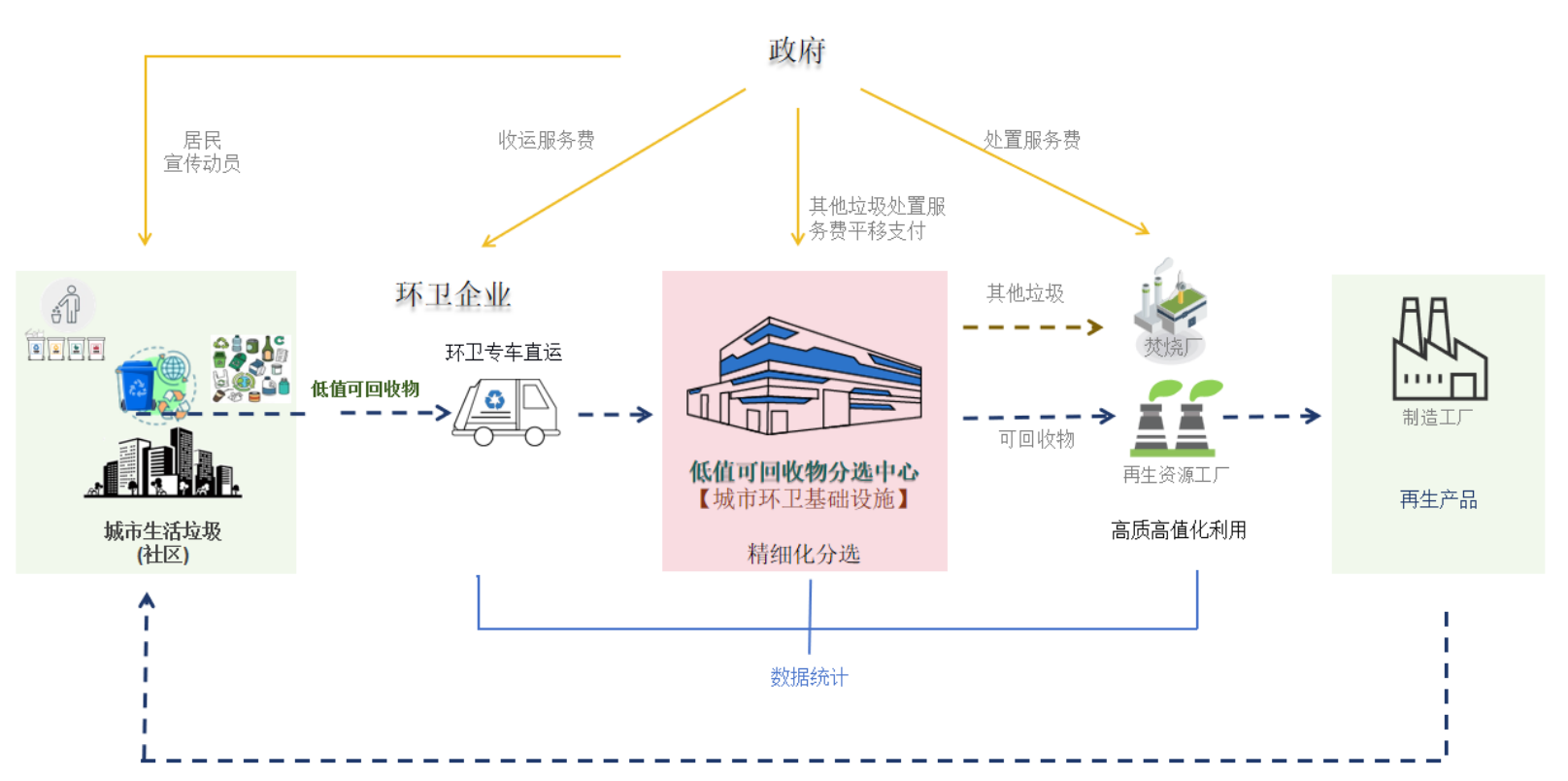
"Xiamen's low-value recyclables recycling system solves the problem of difficult recovery of low-value renewable resources, breaks through the bottleneck of the development of the renewable resources recycling industry, realizes the large-scale and resource utilization of low-value recyclables of domestic waste, activates the low-value renewable resources market, and provides innovative solutions for plastic pollution control in Xiamen. According to the relevant personnel of the Xiamen Municipal Bureau of Ecology and Environment, the project was included in the important cases of the 28th United Nations Climate Change Conference and the third session of the Intergovernmental Negotiating Committee on Plastic Pollution (including Plastic Pollution in the Marine Environment) (INC-3), contributing "Chinese wisdom" to global plastic pollution control.
What are the low-value recyclables? Xiamen's "Guiding Catalogue of Low-value Recyclables" stipulates that low-value recyclables are mainly divided into five categories, namely waste glass, ceramics, waste plastics, waste paper and waste textile and clothing. In life, there are also plastic lunch boxes, plastic cups, foam blocks, Tetra Pak packaging, paper cups, paper bowls, instant noodle bowls, soy milk cups, express bags, express fillers, plastic bags, etc. In Xiamen's low-value recyclables sorting center, they have been efficiently and accurately sorted to obtain high-value "rebirth", which is the "sweet and sweet" in the eyes of many enterprises.
Since the construction of the country's first low-value recyclables sorting center in Xiamen, through the comprehensive exploration of low-value recyclables, more than 10 patented technologies have been declared, such as "a treatment process for intelligent sorting of low-value recyclables of domestic waste" and "intelligent sorting system for low-value recyclables". It has established an intelligent garbage classification and delivery system, actively explored the concept, mode and technology of recycling low-value recyclables, built an intelligent and efficient sorting system, and used spectral recognition and AI technology to realize the intelligent automatic sorting of 15 recyclable categories, which solved the problem of classification and disposal of domestic waste "first sorting and then mixing", opened up the "blocking point" of source classification and end utilization, and formed an integrated operation system of domestic waste classification and recycling of renewable resources.
According to statistics, the annual processing capacity of Xiamen's low-value recyclables sorting center has reached 18,000 tons, and so far, 64,000 tons of carbon dioxide emissions have been reduced. "On the basis of the success of the pilot, in the next step, Xiamen plans to lay out a new sorting plant, form a low-value recyclable sorting and utilization system, further implement the 'double carbon' action, and help the construction of ecological civilization. Xiamen Municipal Bureau of Ecology and Environment said.
Government-led, all-round support for the recycling of low-value recyclables
In recent years, Xiamen's garbage classification work has been at the forefront - as of October this year, Xiamen's domestic waste classification work has ranked first in the national garbage classification evaluation of the Ministry of Housing and Urban-Rural Development for 21 consecutive quarters. The awareness rate of garbage classification in the city is 100%, the participation rate is over 97%, and the accuracy rate is over 85%. Behind this, the government has led the establishment of a long-term mechanism, strengthened the supervision and evaluation of domestic waste classification, and promoted the comprehensive recycling of low-value recyclables of domestic waste from the source.
"Xiamen City has gathered the joint efforts of many parties to continuously improve the long-term mechanism of sorting and recycling. Xiamen Municipal Bureau of Ecology and Environment said that Xiamen City implements weekly scheduling, monthly meetings, and on-site coordination meetings, improves mechanisms such as unannounced inspections, third-party evaluations, and professional evaluations, and establishes a normalized supervision and evaluation mechanism. In addition, a joint law enforcement mechanism for domestic waste classification has also been established, and law enforcement has been normalized and fully covered in all aspects of waste classification, and typical law enforcement cases have been exposed in a timely manner through the media to expand the influence of law enforcement. At the same time, promote the construction of a digital supervision system for domestic waste classification, and monitor the whole process of classified collection, transportation and treatment through intelligent monitoring and GPS positioning.
The implementation of this demonstration project is inseparable from strong policy support. "Xiamen City took the lead in formulating the "Xiamen Municipal Domestic Waste Low Value-added Recyclables Guidance Catalogue", issued the "Work Plan for Accelerating the Establishment and Improvement of a Green, Low-Carbon and Circular Development Economic System", and introduced the subsidy measures for the collection, transportation and treatment of low-value recyclables..."Xiamen Municipal Bureau of Ecology and Environment said that Xiamen City has also established a mixed ownership company with state-owned enterprises and private enterprises to establish a government-led, state-owned enterprise is responsible, and private enterprises operate a working mechanism to provide land, guarantee funds, Rationalize the mechanism, fully support the planning, construction and operation of the low-value recyclables sorting center project, further clarify the detailed requirements for the resource utilization of low-value recyclables, and ensure the source classification and accurate recycling of low-value recyclables.
The whole chain implements the classification and recycling of low-value recyclables
Every day, the residents of the community do a good job of garbage classification and delivery, and the sanitation enterprises regularly and fixed-point classification and direct transportation to the sorting center, and then the professional enterprises carry out centralized sorting and utilization... From sorting to collection and transportation, to recycling and disposal, all links are carried out in a standardized manner and efficiently coordinated, so that low-value recyclables can be turned into treasure to the greatest extent - this is the role of the whole chain of classified recycling.
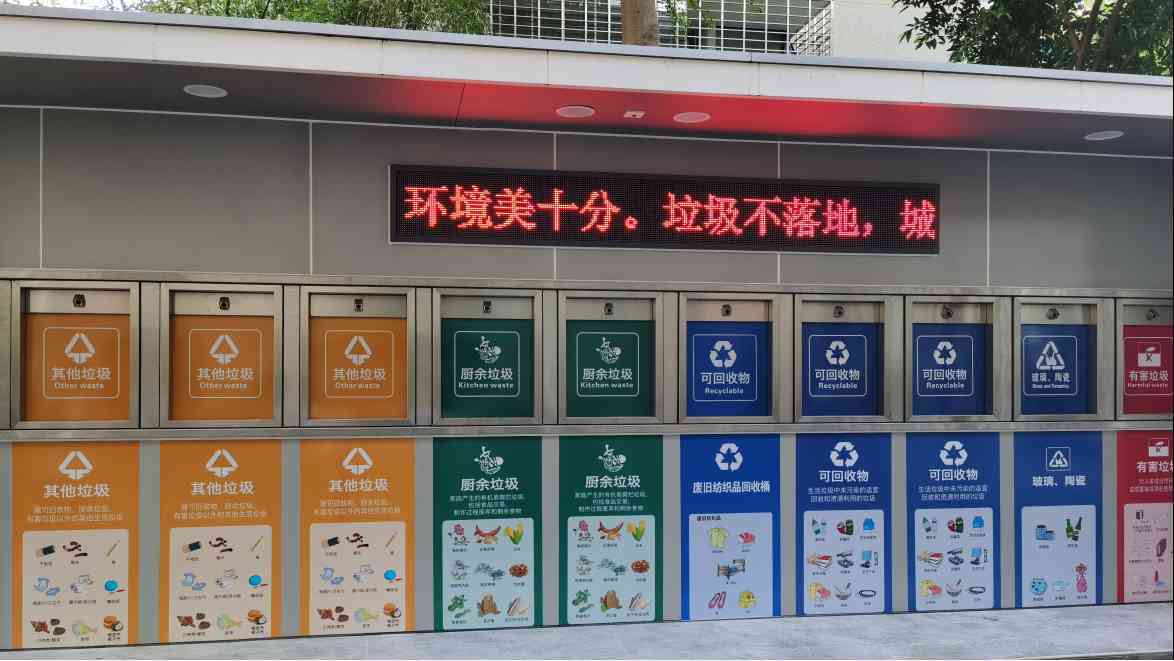
Low-value recyclables are valuable recyclable resources that can be misplaced and ended up in other bins if the front-end is not finely sorted by the waste sort. In recent years, Xiamen has continuously deepened the optimization of the whole chain of governance, and built an integrated operation system covering the front, middle and back ends to ensure the efficient recycling of low-value recyclables.
In order to ensure the effective classification of the front-end, Xiamen City has multi-channel and all-round publicity and promotion of the classification method of the "Xiamen Municipal Domestic Waste Low Value-added Recyclables Guidance Catalogue", and fully mobilized the enthusiasm of relevant subjects in all links. Xiamen Municipal Bureau of Ecology and Environment related personnel introduced. Nowadays, each garbage drop point in Xiamen has added "recyclable" garbage cans, set up three levels of "supervisors", and set up at least one garbage supervisor at each garbage drop point to guide residents to accurately classify.
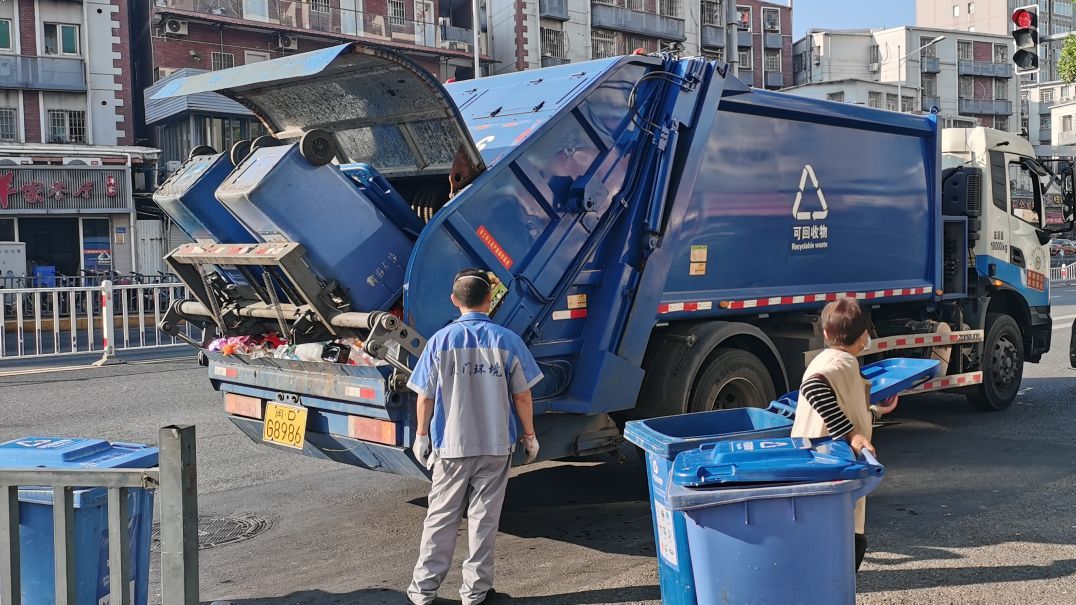
In the mid-end link, Xiamen City adopts the off-peak direct transportation mode of "fixed-point collection, barrel truck docking, and public transportation" to avoid "sorting and then mixing, mixed loading and mixed transportation" of domestic waste. At present, Xiamen is equipped with 39 direct trucks, 47 routes and 1,399 transfer points for the collection and transportation of low-value recyclables, which are collected by various communities and directly transported to the low-value recyclables sorting center for centralized processing. "The low-value recyclables sorting center can statistically analyze the type, category and source data of transport vehicles in real time, covering the whole process, realizing information openness and transparency, classification and traceability, and providing data support for supervision. Xiamen low-value recyclables sorting center related personnel introduced.
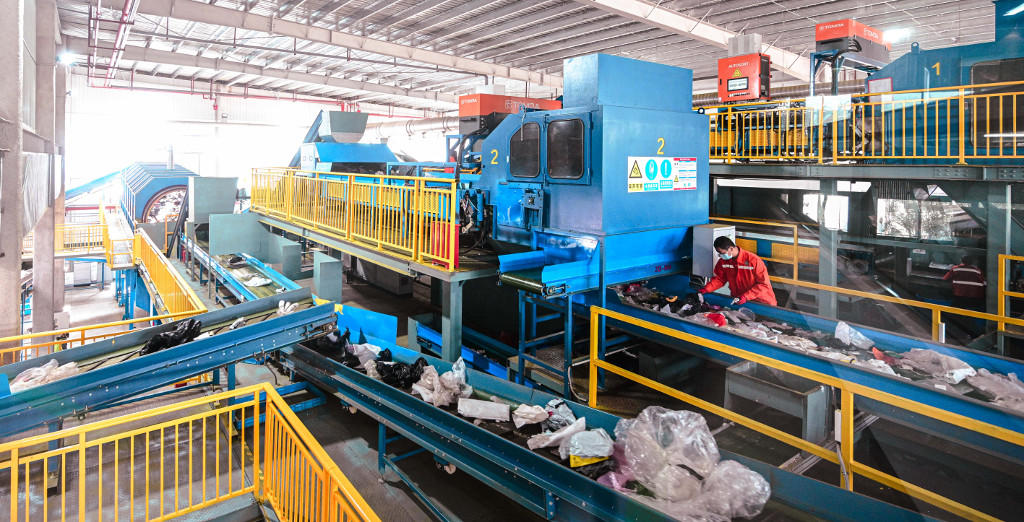
Efficient use of the end, pay more attention to "precision". "After effective sorting and treatment, composite materials such as paper, plastic, and metal can be used separately. Plastics account for about 60% of the total, which is the focus of recycling. According to the staff of the sorting center, the recycling methods include physical recycling and chemical recycling. Among them, physical recycling is mainly through compression and baling to form renewable plastics, which are sold to plastic recycling processing plants. Some of them are directly cleaned and crushed into plastic particles or sheets, which are sold to downstream plastic modification enterprises. Chemical recycling is sold to petrochemical and other industry enterprises for chemical utilization of waste plastics to achieve recycling cycle.
Innovate technology to promote the reduction and resource utilization of solid waste in all categories
Takeaway lunch boxes, milk tea cups, instant noodle buckets, express packaging boxes... On a high-speed conveyor belt of 3 meters per second, these low-value recyclables are automatically identified and sorted, and the materials in the whole process of sorting and disposal do not fall to the ground.
At present, Xiamen relies on innovative technology to achieve efficient processing of all categories of low-value recyclables. "The sorting center uses one sorting line as a demonstration line to achieve a disposal capacity of 5 tons per hour and 30,000 tons per year for low-value recyclables. According to the relevant personnel of the sorting center, on the sorting demonstration line, a variety of low-value recyclables that are scattered and mixed are automatically and intelligently sorted.
The premise of intelligence and efficiency is a more scientific and meticulous classification. Low-value recyclables come from all aspects of life, covering a wide variety of varieties, physical forms, and chemical properties. Based on the market demand for downstream renewable resources, the sorting center divides low-value recyclables into 15 sub-categories. After these materials are classified, compressed, and packaged in the sorting center, they form renewable resources, which are sold and transported to collaborative processing and utilization enterprises for recycling.
How to achieve high-quality intelligent sorting? Science and technology are the key. It is understood that the Xiamen low-value recyclables sorting center adopts a self-developed and world-leading sorting process architecture, based on visual perception, deep learning neural network, AI intelligence, near-infrared flying light scanning and other intelligent sorting technologies, to achieve a sorting accuracy of more than 95%.
"The current production method can flexibly cope with the complex working conditions of the fluctuation of the accuracy of garbage classification and delivery in the front-end community and the fluctuation of the amount of feeding, and meet the dynamic needs of the downstream market. The person in charge said that since it was officially put into operation in December 2022, the Xiamen low-value recyclable sorting center has achieved continuous, stable and safe operation for more than 11 months, and reached production ahead of schedule in April 2023, and has now entered the expansion planning stage.
【Key Impacts】
Economic benefits
For every 1 ton of renewable resources sorted out of low-value recyclables, the corresponding output value is about 800-1000 yuan. According to the calculation that a production line disposes of 30,000 tons of low-value recyclables every year, the annual revenue of renewable resource products is about 20 million yuan, and the tax revenue is about 600,000 yuan. Xiamen produces an average of 290,000~360,000 tons of low-value recyclables per year. Currently, the project is being planned to be scaled up. After the expansion, it will produce scale effects, further reduce costs and increase output.
Environmental benefits
Low-value recyclables can be used as industrial raw materials for recycling, reducing the consumption of industrial raw materials, saving petroleum resources, and effectively reducing pollution and carbon emissions. According to the calculation of 2.9 tons of carbon emission reduction and 2.2 tons of oil savings per 1 ton of waste plastics recycled, according to statistics, China's domestic waste removal and transportation volume in 2022 will be about 310 million tons, of which the number of low-value waste plastics will be about 45 million tons, and if all recycling is realized, it will contribute 130 million tons/year of carbon emission reduction and 99 million tons/year of oil savings, accounting for about 20% of China's annual oil imports.
Social benefits
The project is equipped with the construction of a garbage classification propaganda and education center, carrying out special publicity to the public, promoting residents to do a good job of sorting from the source, promoting the recycling of low-value recyclables, leading a low-carbon life, and improving the living environment. As of the end of October this year, the Xiamen Low-value Recyclables Sorting Center has received 190 batches of visits from various departments and the public, with more than 3,500 people. The garbage classification propaganda and education center was selected into the list of excellent publicity and education bases for domestic waste classification in 2023.


