


Series of reports - Carbon Monitoring: Actively Exploring and Moving Forward
Achieving carbon peak and carbon neutrality is a major strategic decision in China, and with the gradual expansion of China's carbon market, the important role of carbon monitoring in supporting services has become increasingly prominent. However, the technologies of automatic carbon dioxide monitoring, carbon emission monitoring of fixed pollution sources, and monitoring of the synergistic effect of pollution reduction and carbon reduction ...... It is still a new proposition for many people in the ecological environment monitoring industry.
At the 14th National Ecological Environment Monitoring Academic Exchange Conference, the participating experts deeply interpreted the practical experience and cutting-edge technology of carbon monitoring, and promoted the development and innovation of automatic and on-site monitoring technology for fixed pollution sources.
Both accounting methods and automated monitoring methods have their own advantages
The direct measurement of carbon dioxide emissions from the environment and pollution sources is the basis and data support for accounting and evaluation, and there are two main methods for quantifying greenhouse gas emissions from pollution sources: the method based on accounting (hereinafter referred to as the accounting method) and the method based on automatic monitoring (hereinafter referred to as the automatic monitoring method). So, what is the difference between the accounting method and the automatic monitoring method, and what is the current application?
"The accounting and reporting guidelines for some of China's carbon market pilot areas are allowed to use the flue gas automatic monitoring system (CEMS) method to determine greenhouse gas emissions, but due to the lack of detailed technical requirements, the automatic monitoring method has not been applied to the carbon trading process in China, but whether it is automatic monitoring management or monitoring related standards, China has a good foundation, and has a standard system that is more suitable for the actual situation of China's industrial source pollutant emissions. Xia Qing, a senior engineer at the China Environmental Monitoring Station, said.
According to Xia Qing, the automatic monitoring method only needs one set of monitoring equipment for each emission source, and the amount of raw data analysis is small; the emission can be directly obtained at the discharge facility; there are standards and specifications in data collection, evaluation, quality control and data recording; in the evaluation of emission data, a high degree of automation can be realized; at any time, the automatic monitoring method can obtain the original data, and the data can be automatically transmitted to the management department; when a variety of fuels are mixed and burned, it has better applicability and does not have to pay additional costs. However, it also has some drawbacks, such as its unsuitability for decentralized emission sources.
"In 2015, more than 70% of thermal power units in the United States had applied automatic monitoring methods to monitor carbon emissions. In terms of quality control, there are also some regulations that put forward the requirements for thermal power units to complete the installation, certification, calibration and calibration of automatic monitoring systems and other quality control requirements. Xia Qing said that the EU also ensures that the two methods of accounting and monitoring have comparable data quality by stipulating the data hierarchy requirements that should be met by various types of data, and in 2019 155 facilities in the EU applied automatic monitoring methods. "That's a low percentage compared to the U.S., about 1.5 percent of the total number of facilities. ”
Xia Qing also gave a further introduction to the characteristics of the accounting method. The accounting method has many years of implementation experience, and most of the enterprises, competent agencies and verification units understand it; there are components and characteristics of various substances (such as calorific value, emission factors, etc.), which can be used to comprehensively assess emissions; if the measurement equipment is relatively independent, the systematic error is generally small; multi-source data cross-cutting method can be used to ensure quality; and the accounting and monitoring method is more suitable for scattered emission sources.
"But accounting methods require a lot of manual processing steps, and when multiple fuels are mixed and burned, there are high sampling and analysis costs. Referring to the limitations of accounting methods, Xia Qing said.
In terms of quality control of carbon monitoring, it is generally divided into three parts: construction conditions, operation and maintenance management, and data reporting. "Whether the monitoring points are set in a standardized manner, whether there is a standardized calibration and maintenance, whether the data review and processing and dynamic control are standardized, will affect the quality of carbon monitoring data. Xia Qing gave an example, "For example, the well-known monitoring point setting, the setting of the monitoring section should meet the requirements of 'front 4 and back 2' (the sampling point should be set at a position of not less than 4 times the diameter of the flue from the downstream direction of the elbow, valve and reducer and not less than 2 times the diameter of the flue from the upstream direction of the above components). If the 'front 4 and rear 2' cannot be satisfied, it is also best to take corresponding measures to ensure that the airflow distribution of the monitoring section is relatively uniform. ”

The monitoring personnel hold the YSI portable multi-parameter measuring instrument to conduct on-site monitoring of water temperature, dissolved oxygen and other monitoring items. Lei Yingjie/photo
In addition, flow rate monitoring is critical to quality control. Xia Qing said that the accuracy of flow rate monitoring is a very big constraint on carbon emission statistics. At present, there are many methods for flow rate monitoring on the market, such as matrix flow meters, three-dimensional pitot tubes, ultrasonic flow meters, etc. In this regard, Xia Qing suggested that the pilot unit should be scientifically selected according to the length of the straight pipe section before and after the monitoring of the fracture and the uniformity of the flow velocity distribution of the monitoring section.
Accounting methods and automated monitoring methods each play a role in different monitoring needs and application scenarios, and they are not unrelated. "The accounting method and the automatic monitoring method are intertwined, and it is the relationship between you and me, and I and you. They can be used as a means of verifying each other, resulting in more accurate carbon emission data. Pei Bing, a senior engineer at the Shanghai Environmental Monitoring Center, said.
The carbon monitoring and assessment pilot project is steadily moving
Local pilots not only provide validation for solving specific problems, but also provide replicable success models for other regions. In September 2021, the Ministry of Ecology and Environment launched a pilot project for carbon monitoring and assessment, and Jinan is one of the 16 pilot cities in the country and the only city in Shandong Province to carry out the pilot work of urban carbon monitoring and assessment. In 2023, the Ministry of Ecology and Environment (MEE) launched a pilot project to deepen carbon monitoring and assessment.
Pan Guang, a researcher at the Jinan Ecological Environment Monitoring Center in Shandong Province, said that the overall goal of deepening the carbon monitoring and evaluation pilot is to preliminarily establish a relatively complete carbon monitoring and evaluation technology and methodology system by the end of 2024 by carrying out the pilot work in key industries, provinces, cities and regions, and explore the establishment of a carbon monitoring and evaluation business operation mode in individual key industries and fields, promote the innovative application of carbon monitoring and evaluation pilot results, better play the demonstration effect, and provide monitoring support for carbon reduction and pollution reduction and international compliance.
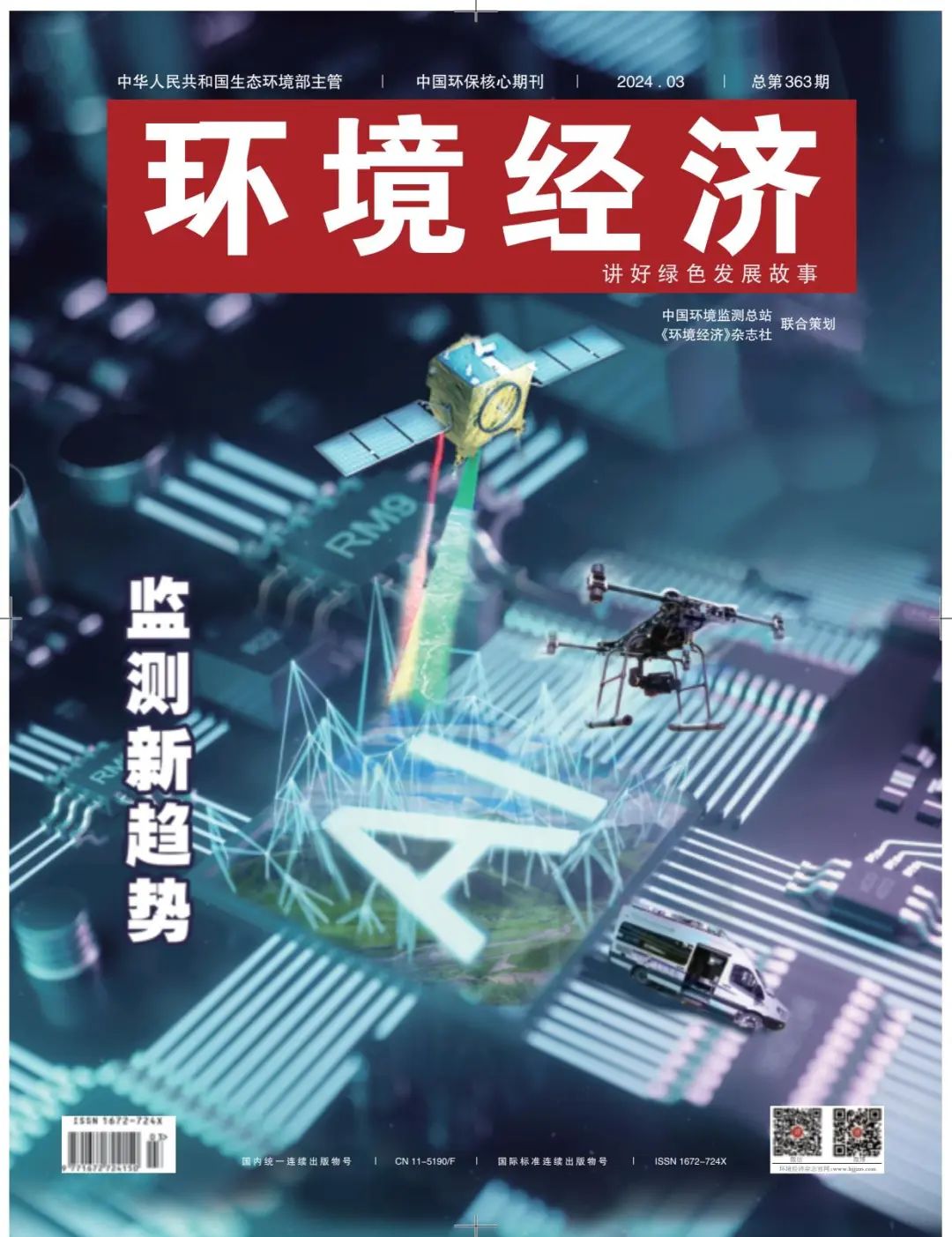
Pan Guang said that in recent years, Jinan's carbon monitoring and assessment pilot work has achieved results. "First of all, the 'sky and ground' integrated monitoring network has been preliminarily built, including space-based satellite remote sensing monitoring, which can understand the distribution of greenhouse gas column concentrations in the whole region. There is also air-based monitoring based on drones, which is used to grasp the vertical distribution of greenhouse gases. In addition, there is a ground monitoring system with high precision as the core, which comprehensively uses high-precision and medium-precision monitoring technology means, and then cooperates with satellite remote sensing, ground-based remote sensing, unmanned aerial vehicles, mobile vehicles and other methods to achieve real-time, dynamic and three-dimensional monitoring of greenhouse gases. ”
"In terms of working mechanism, we have established a special class for carbon monitoring, and the working mechanism of each technical group has effectively promoted the progress of the work. Pan Guang added that in terms of inventory compilation, Jinan relied on the existing working mechanism for the compilation of air pollution source emission inventories, and for the first time coordinated the compilation of high spatial resolution greenhouse gas inventories, obtained Jinan City's high spatial resolution greenhouse gas inventory, and clarified the composition of greenhouse gas emission sources.
In addition, Jinan has also cooperated with the Institute of Atmospheric Physics of the Chinese Academy of Sciences to complete the localized construction of the urban carbon assimilation inversion system, which has the ability to assimilate carbon at the city scale of 1km per hour, explored and established a carbon assimilation inversion technical route covering the whole process of "system construction, system verification and result verification", obtained the accounting results of "top-down" carbon emissions at the city scale, and explored the use of the assimilation inversion results to verify the carbon emission inventory.
Through exploration and practice, Jinan has initially established a systematic and scientific assessment framework, which provides a solid data foundation for the city's carbon emission reduction work, and also provides valuable experience for other cities.
Coordinated monitoring of pollution reduction and carbon reduction has become a trend
"In December 2020, the Central Financial Work Conference proposed to continue to fight the tough battle of pollution prevention and control and achieve the synergistic effect of pollution reduction and carbon reduction. The 2021 National Conference on Ecological and Environmental Protection also clearly stated that the biggest opportunity for ecological environmental protection in the new development stage is to take the realization of the synergistic effect of pollution reduction and carbon reduction as the goal and requirement of in-depth pollution prevention and control, and promote the coordinated governance of pollution reduction and carbon reduction to become an important starting point for promoting the comprehensive green and low-carbon transformation of economic and social development. This is also the background of our monitoring, analysis and research on the synergistic effect of pollution reduction and carbon reduction in Tianjin. Liu Maohui, a senior engineer at the Tianjin Ecological Environment Monitoring Center, said.
In June 2022, the Ministry of Ecology and Environment and other seven departments issued the "Implementation Plan for Synergy in Pollution Reduction and Carbon Reduction", which clearly pointed out that it is necessary to carry out research on the evaluation of the synergy of pollution reduction and carbon reduction in key cities, industrial parks and key enterprises, and guide all regions to optimize the collaborative management mechanism. Therefore, in response to this hot spot at that time, the Tianjin Ecological Environment Monitoring Center carried out a series of studies.
Liu Maohui introduced that since 2013, the Tianjin Ecological Environment Monitoring Center has undertaken the compilation of the emission inventory of air pollution sources in Tianjin, and the air emission sources are divided into ten categories, including fixed combustion sources, process sources, solvent use sources, mobile sources, dust sources, agricultural sources, storage and transportation, biomass combustion sources, waste treatment sources and other emission sources, and updated year by year.
Since 2019, the collaborative compilation of air pollution source emission inventory and greenhouse gas emission inventory has been carried out, and the emission sources are divided into five categories: energy activities, industrial production processes, agriculture, land use change and forestry, and waste treatment.
Since 2020, we have carried out research on Tianjin's dual carbon goals, constructed an LMDI model, a Tapio decoupling model and an extensible environmental impact assessment model suitable for Tianjin, and used these three models to analyze Tianjin's path to carbon peak and carbon neutrality, and put forward countermeasures and suggestions for Tianjin to complete the dual carbon goals.
"In 2013, we first started to exert force at the end of the pollution source, so the air pollution equivalent began to be reduced, but at this time greenhouse gas emissions were still increasing. "Since 2015, we have started to clean up at the source, paying special attention to the control of the total amount of coal, so we have also begun to reduce greenhouse gas emissions. In 2015~2017, air pollution equivalent and greenhouse gas emissions were reduced at the same time, achieving a synergistic effect. ”
It is understood that since 2018, the "Three-Year Action Plan for Winning the Blue Sky Defense War" has continued to promote the reduction of air pollution equivalents in the "Ten Atmospheric Measures". However, due to the changes in the international situation and the impact of the new crown epidemic, especially the impact of the Sino-US trade war, in order to alleviate the sluggish economic growth, the consumption of energy and resources in Tianjin has increased slightly, resulting in an increase in greenhouse gas emissions, and there is no synergistic effect in reducing air pollution equivalent, increasing greenhouse gas emissions, and reducing pollution and carbon emissions in 2018~2023.
In this regard, Liu Maohui said that through the measures taken in the "14th Five-Year Plan", it is predicted that Tianjin will begin to reduce greenhouse gas emissions in 2024, and has the conditions to achieve carbon peak before 2025, and it is expected that Tianjin will achieve synergy in pollution reduction and carbon reduction in 2024~2060.
Looking to the future, Liu Maohui said that the next step will be to continue to carry out the analysis of the synergistic effect of pollution reduction and carbon reduction in different regions, different departments, different industrial parks, and different key enterprises. In addition, it is necessary to break through the limitations of a single model tool, combine the advantages of multiple models, and strengthen the construction and application of the model system of synergistic effects of pollution reduction and carbon reduction. Finally, it is necessary to strengthen the analysis of the synergy between pollution reduction and carbon reduction and environmental benefits, economic benefits and health benefits, and further enrich the technical system of synergies.


