


Top five global trends for the next five years
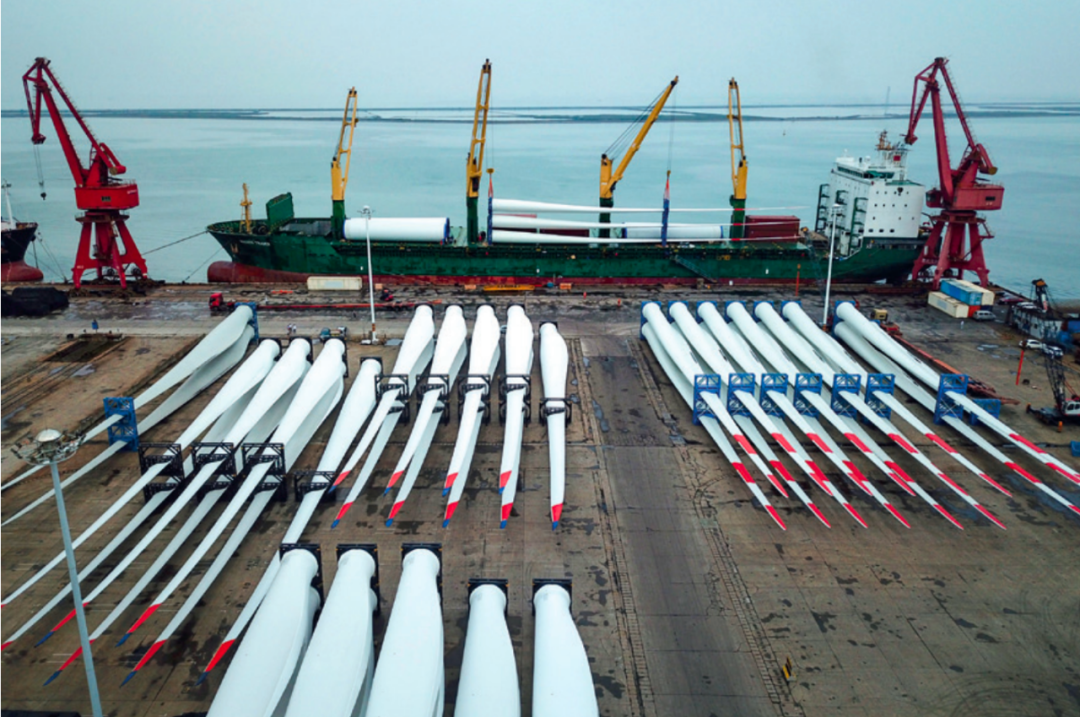
Wind turbine blades waiting to be shipped for export. Figure/IC
It is the core task of the A.T. Kearney Global Business Policy Committee to continuously explore the global political and business operating environment from the dimensions of population, economy, environment, geopolitics, resources, and technology. In previous years' reports, we captured medium- and long-term trends such as climate deterioration, geopolitics, and artificial intelligence, and in this year's report, we highlight "emerging trends" outside of these forces – medium- to long-term trends that may seem inconspicuous today, but will have a significant impact on business and government operations over the next five years. By identifying the top five global trends for the next five years, we hope to help businesses and governments build ahead of future developments.
Those who know change with the times, and those who know make things as they go.

The intensity of industrial policy has reached a new high
As an important starting point for protecting national security and enhancing economic competitiveness, industrial policy is gaining more attention around the world. After the epidemic, countries are facing many new challenges, such as over-reliance on key resources, high demand for clean energy, and the development and application of advanced technologies such as artificial intelligence, which are driving a new round of industrial policy adjustments.
The US Inflation Reduction Act, the European Union's Green Deal Industrial Plan, the Made in China 2025 Action Plan, and the Make in India Plan are just a few examples of large-scale industrial policies. As countries compete with each other and want to ensure sustainable economic growth and maintain financial and fiscal stability over the next five years, various industrial policies are likely to exacerbate geopolitical instability and economic risks.
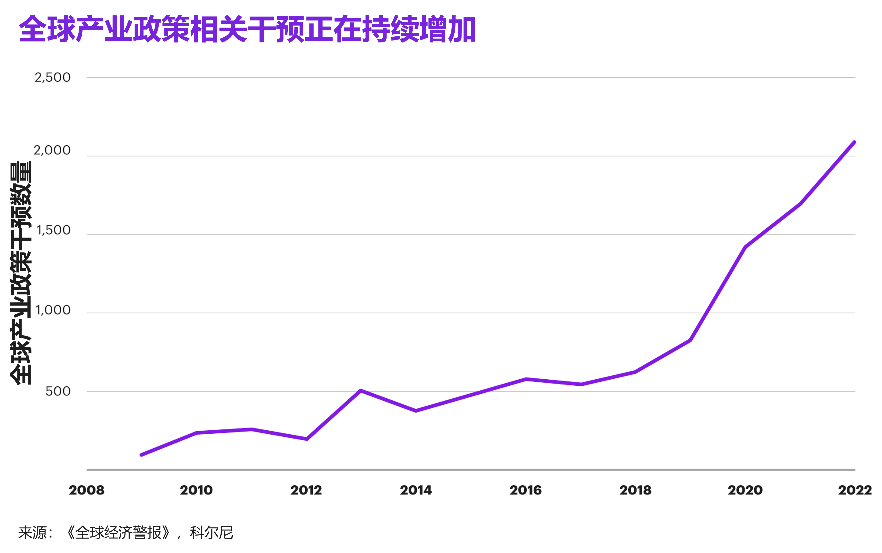
Global industrial policy is rapidly proliferating. A 2009 study by the Global Economic Alert tracked 90 interventions related to industrial policy, and by 2022, that number had grown to 2,083. From January to July 2023 alone, there have been 1,868 interventions, almost exceeding the level of the whole of 2022. While policies for traditional industries such as manufacturing, infrastructure, oil and gas, steel, pharmaceuticals, automobiles, and aviation are increasing, challenges such as unstable global supply chains, insufficient production capacity, intensified competition, and net-zero transition are also driving the promulgation and application of new industrial policies in the fields of green energy, agricultural industry, and biotechnology.
Over the past 40 years, China has successfully used industrial policies to invest heavily in and promote the development of manufacturing and state-owned industries. The Asia Society study found that China spends far more on industrial policy than any other major economy, accounting for more than 1.7% of GDP, or more than $248 billion, in 2019. Industrial policy is increasingly seen as a tool for the development of emerging markets. For example, in the wind power industry, China has promoted the development of the industry on a large scale through localization, technology transfer, and the establishment of joint ventures, and promoted the rise of a manufacturing power.
As industrial policies continue to advance, some countries have begun to implement discriminatory policies to intervene to protect their internal industries at the expense of foreign business interests. The United States has strengthened its industrial policy efforts to protect the competitiveness of its domestic economic agents, and reduced its dependence on China's critical manufacturing and natural resources through policy interventions.
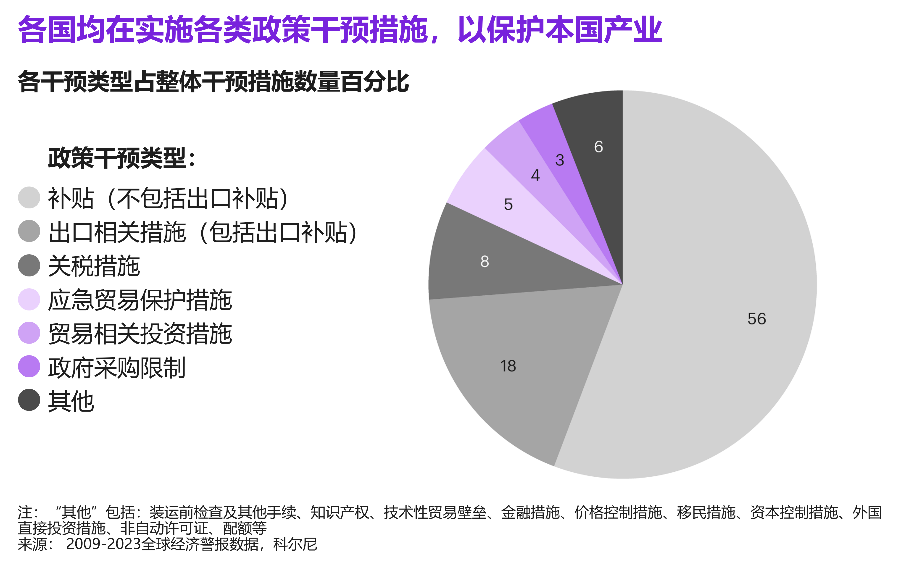
Between the EU and the US, industrial policy can also strain its already close relationship. European leaders have expressed concern about the Biden administration's "Buy American" campaign, as well as the Inflation Reduction Act and the CHIPS Act, pointing to their protectionist overtones. The European Union and the United States are both providing financial support to promote the development of domestic semiconductor manufacturing, and critics say such competitive development will trigger an "industrial policy arms race" on a global scale, resulting in unnecessary oversupply and duplicate spending, which in turn will reduce the efficiency of industrial development.
Industrial policies are also contributing to rising global inequality. Developed countries use industrial policies to bring high-value manufacturing back home, and promote local production through industrial subsidies, export controls, or tariffs, further positioning themselves with developing countries. Effective coordination of industrial policies among countries from a global perspective would help prevent further widening of income disparities.
Prospects and implications for businesses
The rise of global industrial policy is likely to exacerbate geopolitical tensions over the next five years, as countries are stepping up their industrial policies in their own interests. To mitigate rising geopolitical risks, countries need to deepen cross-border coordination to reduce oversupply. Enterprises need to strengthen monitoring of violations of new tariffs and trade restrictions in industrial policies, seek opportunities related to direct subsidies, tax credits and government procurement, and continue to explore industrial alliances and cooperation opportunities in areas such as R&D investment and industry standard setting, so as to improve the overall development efficiency of the industry.

The rise of digital twins
Digital twins will become mainstream in the next five years. The concept of digital twins has been around since 1991, i.e., digital representations of physical systems, products, processes, forming indistinguishable counterparts for simulation, testing, monitoring, and maintenance. Due to factors such as a general lack of understanding of its utility and its high cost, it has not yet become a widespread tool for government or business operations. Improving government processes, supporting urban planning, and helping to diagnose diseases are just the tip of the iceberg of use cases for this technology.
Governments around the world have begun to use digital twin technology. For example, the U.S. Food and Drug Administration (FDA) is developing a digital twin to help it evaluate medical devices before use, and the European Union is working on an initiative called Destination Earth, which will use vast amounts of environmental, socio-economic and satellite data to develop a digital twin of the Earth to help policymakers and the public better cope with climate change.
Digital twins can also help reshape cities around the world. More than 500 city digital twins are expected to be developed by 2025, and the technology could save about $280 billion by 2030 by improving urban planning capacity and creating smart cities.
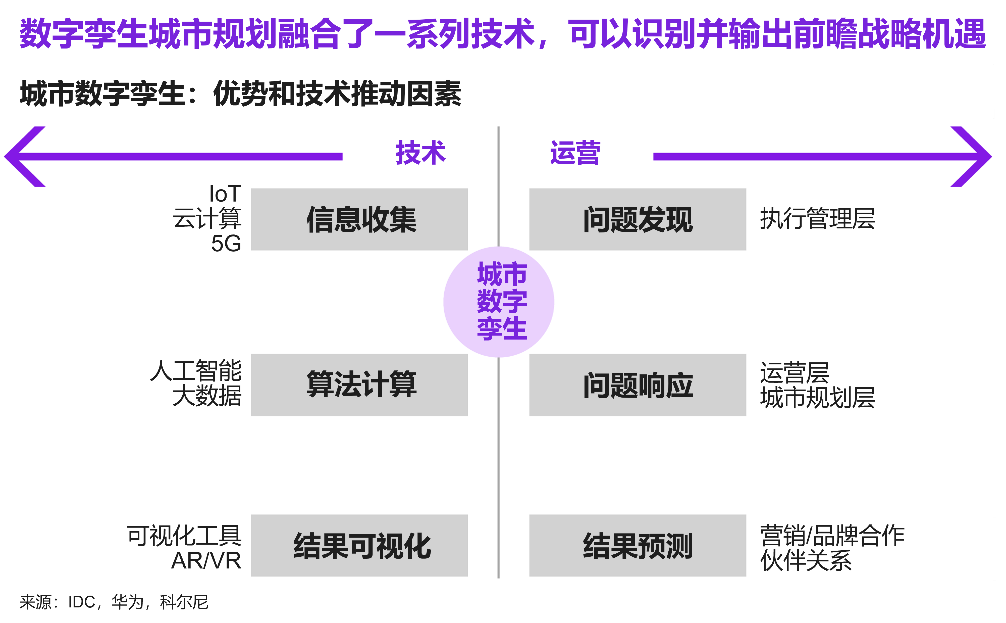
The digital twin market will expand rapidly in the next five years at a compound annual growth rate of 50%~70%, depending on different industries, mainly in the manufacturing, aviation, and automotive industries (see Figure 10).
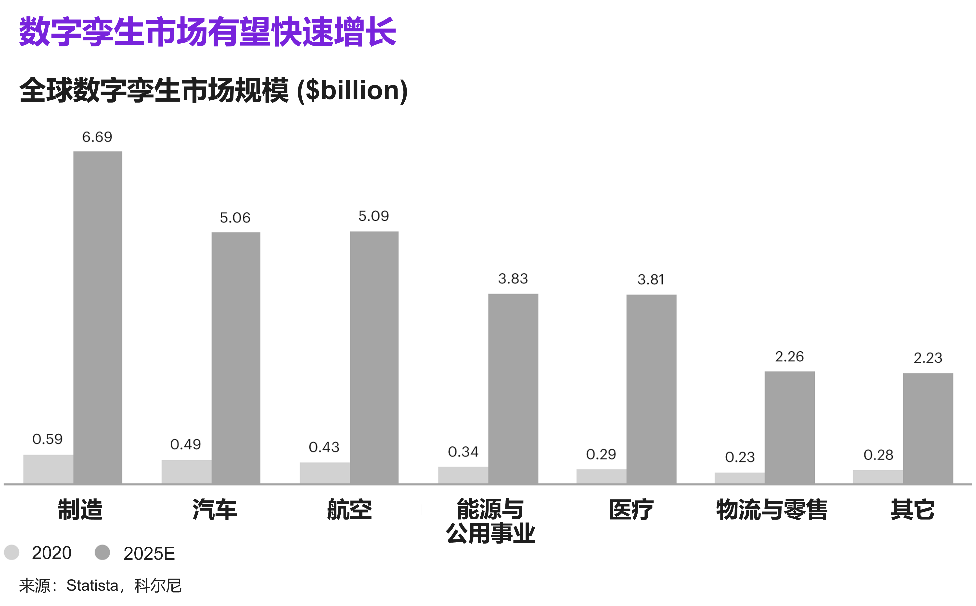
Digital twins can also improve supply chain operations, enable equipment layout testing, and model various production outputs as demand changes.
Prospects and implications for businesses
Digital twins can revolutionize the way governments and businesses operate. Over the next five years, companies will emerge that combine digital twins with other 4IR technologies, such as AR and VR capabilities. The combination of innovative technologies will elevate the level at which business leaders can leverage technology for strategic planning.
First, assess if and how the digital twin can work for your business, second, ensure cybersecurity measures are in place, and finally, strengthen data management processes.

Strengthen the conservation of biodiversity
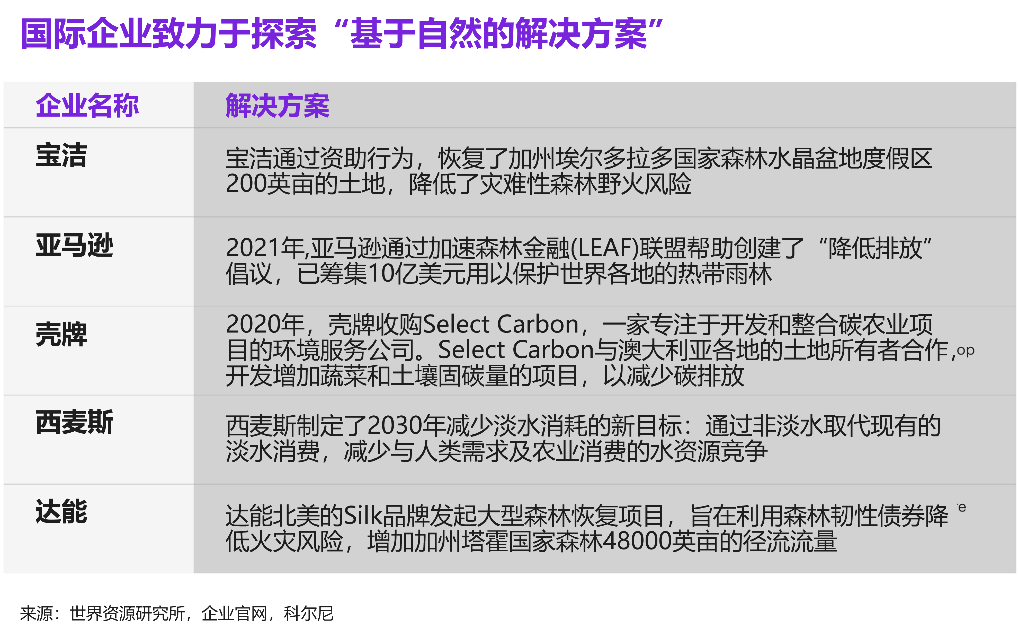
Of the 8.7 million species of plants and animals that exist, 1 million are at risk of extinction within a few decades. According to the World Bank, ecosystem degradation could lead to an annual global loss of $2.7 trillion, or 2.3% of global GDP, by 2030 as economically beneficial wildlife such as fish become extinct. Given the urgency of biodiversity issues, there is increased pressure on governments and businesses to step up efforts to prevent species extinction over the next five years. More attention will be given to "nature-based solutions", i.e. the protection, management and restoration of natural systems to address societal challenges. Such solutions include initiatives such as funding to restore vegetation and reduce water waste.
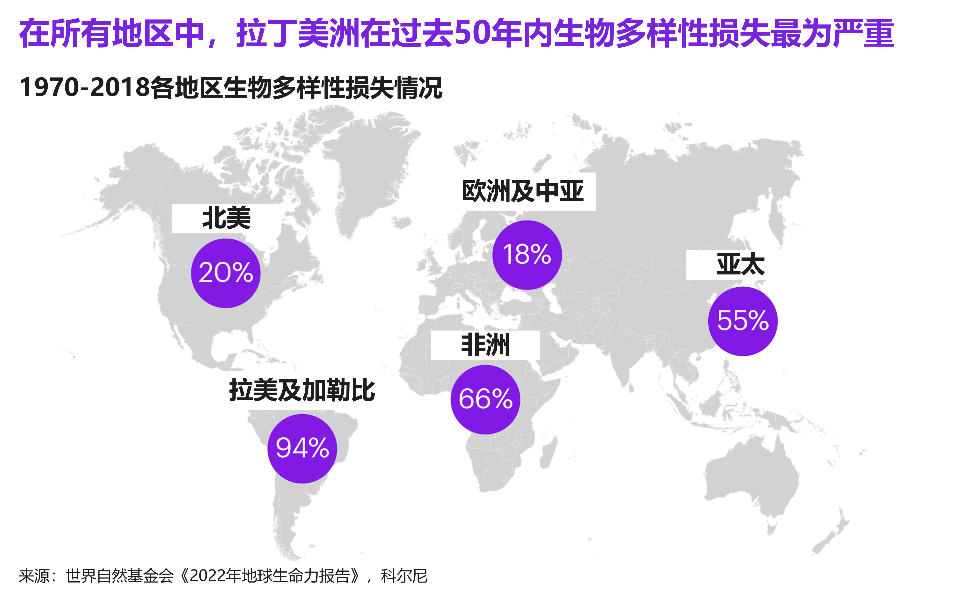
According to WWF's Living Planet Report 2022, wildlife populations have declined by an average of 69% since 1970. The extent of biodiversity loss varies across regions.
Human activities have long threatened biodiversity. Overfishing is one of the main problems, with a negative impact on employment and the global economy, in addition to endangering stocks. The demand for fish continues to increase around the world, and more businesses and jobs depend on declining fish stocks. As fish disappear, so do jobs and coastal economies.
Fossil fuel burning and the industrialization of agriculture have a significant impact on the planet's biomes and ecosystems. Wilderness areas have been cleared on a large scale to accommodate the expansion of livestock and crop cultivation, and wild areas have been reduced, ecosystems have been destroyed, and global biodiversity has been put at risk.
We expect governments and businesses to work together to mitigate biodiversity loss over the next five years. The High Seas Treaty is an important step in the right direction. Currently, only about 1% of the high seas are protected, and the agreement will contribute to achieving the biodiversity framework agreement adopted at COP15 to protect at least 30% of the world's land and sea by 2030.
In July 2023, the European Union passed the Nature Restoration Law, which aims to restore degraded ecosystems in Europe, with plans to restore 20% of land and 20% of the ocean by 2030, and restore all ecosystems by 2050, the first major EU legislation to protect biodiversity in the last 30 years.
Businesses are also actively exploring "nature-based solutions" to reduce biodiversity loss. The Million Mangroves Project was launched in 2018 with a mission to harness the power of business to fund mangrove restoration projects. The project's supporting companies have committed to planting more than 750,000 mangroves. In addition, L'Oréal, Mars, Unilever, Nestlé, Danone, Kering and other groups have joined the One Planet Business for Biodiversity (OP2B) to explore alternative agriculture practices to conserve biodiversity at scale.
Prospects and business implications
The continued decline of biodiversity is an existential crisis. Since business is highly dependent on nature, the economic costs will be enormous if governments, businesses, and society do not act quickly. The World Economic Forum (WEF) estimates that by 2030, strengthening nature-friendly infrastructure could generate more than $3 trillion in business opportunities and 117 million jobs per year.
In addition to exploring "nature-based solutions", companies need to establish a multi-dimensional ESG assessment system, rather than reducing carbon emissions as a single goal, because climate change, especially biodiversity-related challenges, is not only driven by carbon emissions. Taking action now to avoid future losses is the best option for all businesses.

Unlock the value of e-waste
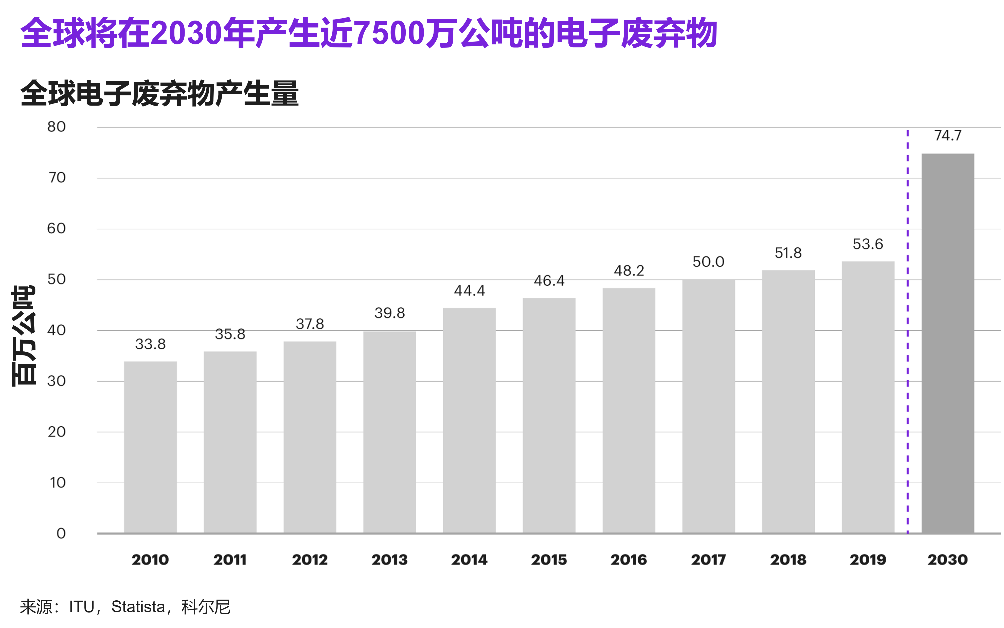
E-waste is piling up around the world. According to the International Telecommunication Union (ITU), e-waste is "one of the fastest-growing types of waste in the world". Discarded cell phones, computers, televisions, microwave ovens, IT servers, and other electrical equipment are responsible for 53.6 million metric tons (Mt) of electronic waste in the world today, equivalent to about 5,300 Eiffel Towers.
A large proportion of this waste is unaccounted for and poorly recycled, in part due to lagging regulations in both developed and emerging markets. The informal disposal of e-waste exposes people to toxic substances that harm human health. Proper recycling and reuse of e-waste can reduce the amount of mining required to produce new electronic devices, curb carbon emissions, and create a virtuous cycle. According to ITU projections, effective recycling of e-waste could generate an economic return worth more than US$62.5 billion annually and become a key part of a thriving circular economy.
From mobile phones and laptops to refrigerators, TVs and more, all discarded household or business items with circuits or electrical components and power or battery power are part of the rapid growth of global e-waste. E-waste generation is expected to grow to 74.7 metric tons by 2030 and 110 metric tons by 2050 if conditions remain constant (see Figure 7).
E-waste creates a huge carbon footprint and accelerates global warming artificially. Manufacturing electronic devices requires the mining of various minerals such as gold, lithium, tin, and copper. With the expansion of electronics production, traditional mining will not be able to meet the demand for rare earth elements for electronic devices. The current demand for rare earth elements exceeds the supply by 3,000 tonnes, and the gap between supply and demand is expected to continue to widen by the end of the decade. Currently, e-waste recycling capacity is still insufficient to fill the gap, and tracking e-waste is necessary but challenging to ensure its recycling.
In addition, untracked e-waste poses a threat to human health and the environment. E-waste has large amounts of mercury, cadmium, and lead. Improper e-waste disposal releases harmful pollutants that leach into groundwater, contaminate food, pollute ecosystems, and harm air quality, resulting in elevated levels of heavy metals and pollutants in the blood of people living in e-waste-exposed areas.
If recycled properly, e-waste can bring billions of dollars in economic returns.
As many as 69 cyclical elements, including raw materials and precious metals, can be found in electrical and electronic equipment, with the total value of raw materials in e-waste reaching $57 billion. If a widespread system for the collection and use of waste e-waste and the recycling of critical components is established, the need for new raw materials will be reduced. A circular economy based on e-waste can create jobs and economic growth while also reducing emissions.
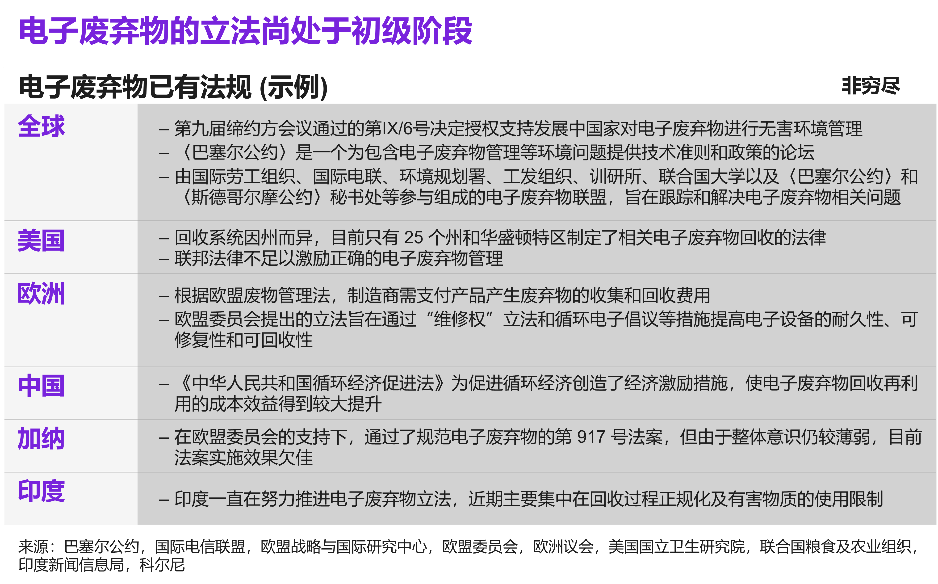
Better regulation and financial incentives are essential to capture the value of e-waste. E-waste legislation is already in place, but stronger regulation and economic incentives are needed to expand recycling and the circular economy.
Prospects and implications for businesses
Over the next five years, more companies will invest in a circular economy based on e-waste and incorporate e-waste recycling into their business models. More regulatory and economic incentives can encourage companies to take advantage of e-waste recycling and grow their business lines to take advantage of the benefits of e-waste management. Large-scale international cooperation in this area will also be possible.
First, you need to monitor legislation in the area of e-waste and ensure compliance with all existing and introduced laws, and second, closely track e-waste in the supply chain. Finally, use the tools and skills to drive a circular economy.

Rapid transit is accelerating
United and Archer plan to launch air taxis in 2025 that will take travelers from downtown Chicago to O'Hare International Airport in 10 minutes — a journey that typically takes 30 to 90 minutes. Aska, a California-based flying car company, debuted a prototype flying car called the A5 in 2019 and took pre-orders in 2021, with the first aircraft expected to ship in 2026. Hyperloop, also a rapid transit technology under development, will have the opportunity to be commercially available by 2027. It can move passengers and cargo at speeds of more than 700 miles per hour in huge low-pressure tubes.
With flying cars, hyperloops, and other innovative rapid transit technologies likely to become mainstream within the next five years, policymakers are under increased pressure to implement policy regulation and address related safety concerns. The development of rapid transit capacity will also have an impact on the environment and population, exacerbating the imbalance in economic development between regions.
Key industries such as transportation, tourism, and healthcare will benefit from rapid transit innovations. Flying cars and hyperloop will dramatically save people time traveling to far-flung destinations, creating new opportunities for tourism, transportation, and more jobs for drivers.
Rapid transit innovations will have an impact on several industries.
Industries such as transportation, tourism, and healthcare will benefit from rapid transit innovations. With flying cars, people will be able to travel faster and farther than traditional cars, leading to more opportunities for transportation companies and more jobs for drivers (and pilots, in the case of flying cars). Flying cars and hyperloop will make it easier for people to travel to far-flung destinations, creating new opportunities for tourism businesses, flying cars and cargo-carrying hyperloop vehicles will reduce construction time and reduce the cost of construction projects, and the healthcare industry will also benefit from hyperloop.
As rapid transit heats up, other industries and businesses may face challenges. The oil and gas industry is likely to take a hit with the rise of electric flying cars and energy-efficient hyperloops, e-commerce and logistics companies will have to rethink their modes of transportation to make them greener and more cost-effective because hyperloops can efficiently transport goods, and short-haul airlines may be at risk of being squeezed out of the market.
Rapid transit will also have an impact on governance, the environment, and population.
As the commercialization of these two technologies accelerates, policies and regulations are still in their infancy, but are gaining momentum in many countries. In October 2022, Japan's Ministry of Transportation signed an agreement with the Federal Aviation Administration of the United States to jointly develop rules and standards for putting flying cars into practical use. Japan is expected to use flying cars as a means of transportation at Expo 2025 in Osaka. The European Union is also developing a regulatory framework for the hyperloop system, which is expected to be completed in the first quarter of 2024. It is incumbent upon policymakers to regulate and invest in this area in advance, and most importantly to ensure vehicle safety.
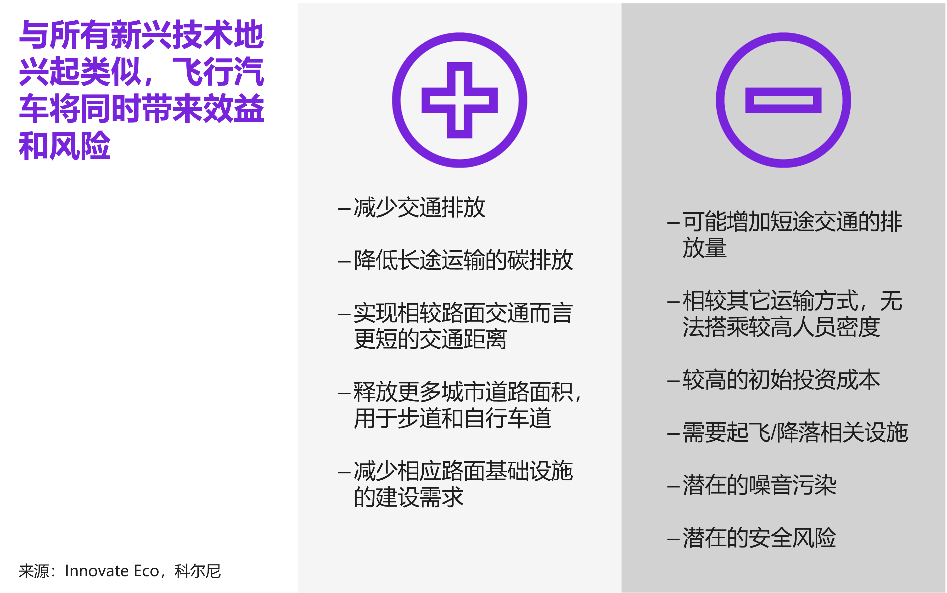
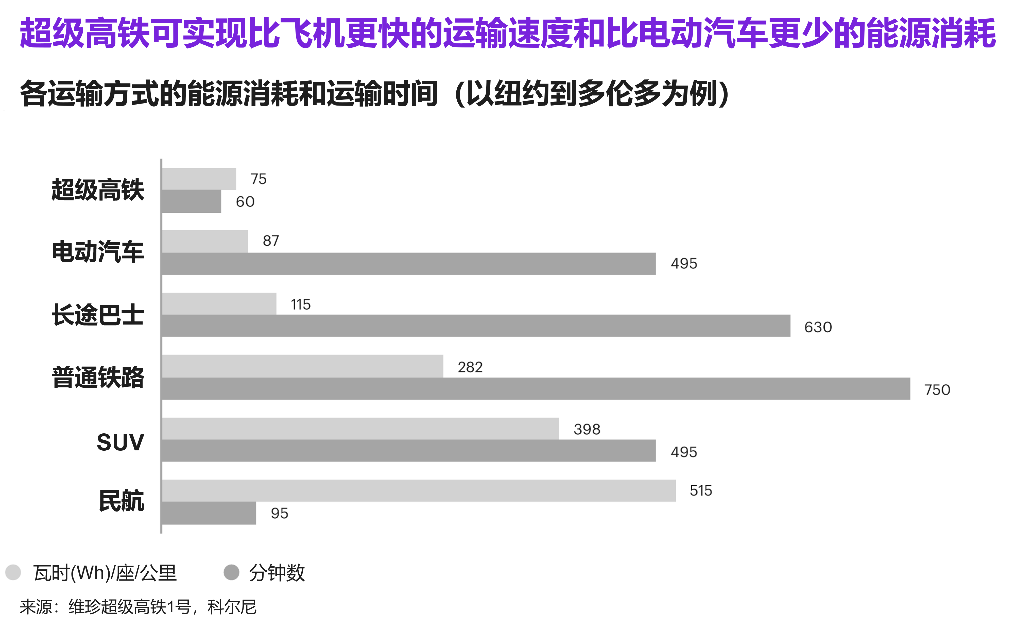
The environmental impact of rapid transit innovations is already paying off. According to a study by the Center for Sustainable Systems at the University of Michigan and Ford Motor Company, a flying electric vehicle with a full load of one pilot and three passengers would "produce about 52 percent less greenhouse gas emissions than conventional cars and 6 percent less than electric vehicles." This advantage is most pronounced in cities with high traffic congestion.
The performance of Virgin Hyperloop One has proven that the Hyperloop has extremely high energy efficiency advantages. The company estimates that "if every passenger flight with a global range of between 310~930 miles were replaced with a hyperloop, it would be possible to reduce fossil fuel emissions from aviation by 58%." ”
While new rapid transit capabilities demonstrate astonishing technological sophistication and convenience, they also have the potential to exacerbate global wealth inequality. Inequality between countries with the capacity to deploy new technologies on a large scale is likely to widen as infrastructure is in place, but at the same time, these technological advances can alleviate tensions such as the education and housing crises.
Prospects and implications for businesses
We are on the verge of a rapid transit revolution, with policymakers struggling to strike a difficult balance between policy and regulation. Achieving this innovation can yield huge economic benefits, but safety issues cannot be ignored. Innovators in the rapid transit sector need to work across sectors with numerous groups such as rail operators, national aviation regulators, automotive companies, and civil society.
The next five years are full of hope and challenges. Business leaders need to be resilient, keep pace, respond effectively to every major trend, and leverage the value they hold to thrive and thrive.
Eric Peterson is a Partner and Managing Director of A.T. Kearney's Global Business Policy Committee, Terry Toland is the Project Manager of A.T. Kearney's Global Business Policy Committee, He Xiaoqing is A.T. Kearney Global Partner and President of Greater China, and Zhou Pengyuan is a Partner of A.T. Kearney Greater China


