


Zero Waste = Waste Sorting? NO! Experts teach you how to practice zero waste in your life
"You know what? The degradation time of garbage left in the wild may be several times that of our lives: the degradation time of wet paper towels is greater than 100 years, the degradation time of aluminum cans is greater than 200 years, and the degradation time of plastic bottles and ordinary plastic bags is 200-500 years... These also ensure the natural degradation time in relatively humid areas after burial treatment, and longer degradation times in direct discarding or dry areas. ”
Recently, in a series of online training activities carried out by the 2023 "Ford Environmental Protection Award", Wu Xiao, the person in charge of the winning project of the 2022 "Ford Environmental Protection Award" Climate Change Action Award and the founder of the environmental innovation brand Nuolu, gave the theme of "Zero Waste is Not That Difficult", teaching the public how to practice the low-carbon concept of zero waste from the three aspects of source reduction, reuse and recycling, making it a life attitude and way.
Zero waste ≠ garbage sorting, but a chain-based management model, involving the interaction between people and things
Nuolu Environmental Protection has been focusing on designing public practice plans for zero waste and carbon reduction for different scenarios of urban life. While helping all parties to achieve rational use and proper management of resources and energy, it is also creating public opportunities to jointly maintain a better environment. They have designed scene projects such as zero-waste music festivals, low-carbon conferences and low-carbon offices, and green marathons.
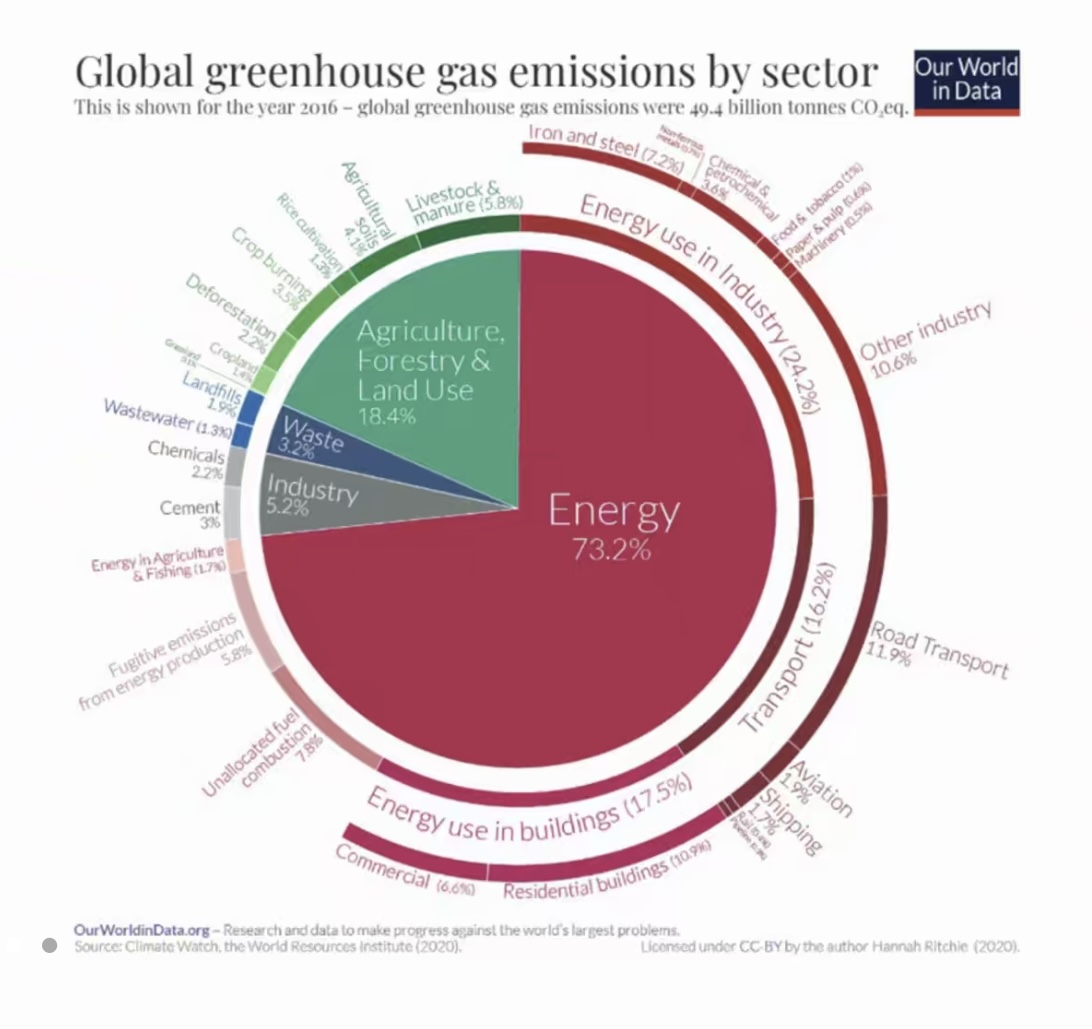
Why did you choose waste management? Wu Xiao said that according to the statistics of the United Nations, the annual carbon emissions of global waste landfill disposal (blue part of the figure below) and the carbon emissions of the global aviation industry (gray part of the figure below) are basically the same. Sticking to the path of waste management is an important part of responding to the "dual carbon" goal and effectively responding to climate change. Moreover, waste management is an opportunity that is easily accessible to the public and highly feasible, and through this pathway to respond to the "dual carbon" goal, it is easy to find a foothold for existing experience, and then transform it into concrete actions.
For the concept of "zero waste", many people will directly equate it with garbage classification in daily life. In this regard, Wu Xiao said that the two are actually different concepts. Garbage sorting is an action; whereasZero waste is a chain-based management model that involves all aspects of the process, from source reduction to end-of-line disposal.AndZero waste management is not only about managing garbage, but also about the interaction between people and things, and it is necessary to consider how to use and dispose of items from the front-end, middle-end, and end-of-all links.
"The 3R principle (i.e., Reduce, Reuse, and Recycle) is the basic core of zero waste." Wu Xiao said that this is also the main part of the public's practice of zero waste in life, and the 3R principle is in order, in daily life, we must give priority to source reduction, followed by reuse, and finally recycling.

According to Wu Xiao, at present, the Zero Waste International Alliance has expanded the 3R concept to multiple levels, subdividing seven links: reconsideration and redesign, reduction, reuse, reuse or composting, material recycling, residue (biological treatment or fixed landfill), and non-reuse (incineration or power generation), so as to maximize the use of resources, the best use of waste, and the minimization of waste.
Reduce the material and energy entering the production and consumption process, and grasp the key links of source reduction
With the progress of production technology and the improvement of infrastructure construction, the logistics and freight industry has been iteratively upgraded, which also makes us now have a significant reduction in the cost of producing, transporting and consuming an item. Since source reduction is a key part of the public's practice of zero waste in their daily lives in the 3R principle, how should they be implemented?
Wu Xiao said that in the front-end source reduction link, measures can be taken to avoid a lot of waste generation, specifically to reduce the material and energy entering the production and consumption process, save resources and reduce waste generation from the source. For example, when we go out to drink coffee, we can bring our own cups to reduce the consumption of paper cups; Go shopping in the supermarket and bring your own environmentally friendly cloth bags to reduce the use of plastic bags; Go to the restaurant to eat, bring your own reusable lunch box to pack leftovers... There are many scenarios in life that can avoid waste generation from the front end.
In the process of source reduction, many people think that the use of plastic bags made of degradable materials can also solve the problem of waste generation. In this regard, Wu Xiao said,Degradable plastic bags are degradable.For example, degradable bags containing food waste can be converted into carbon dioxide and water in the process of composting together with kitchen waste, but if it is disposed of with other garbage and used for general landfill and incineration, it does not have the original intention of being degradable, so it is necessary to strictly follow the degradation conditions to achieve carbon reduction and waste generation.
This is only in terms of municipal solid waste, and there are some outdoor enthusiasts, reflecting that there is a lot of outdoor out-of-control garbage, and the speed of municipal management personnel to clean up garbage cannot keep up with the speed of public discarding, so can the addition of garbage cans solve the problem? Wu Xiao said that in response to this problem, they have done research and consulted experts and found thatAdding trash cans won't solve the problem, as it means that tourists will have less to spend on creating and disposing of garbage, which will be counterproductive.
In addition, Wu Xiao believes that consumers also have many opportunities to express their environmental attitudes in their daily lives, such as supporting some businesses that practice the concept of zero waste to produce some products with low-carbon design, so that social consumption will also develop towards a benign trend, and then drive the emergence of a consumer culture that highlights environmental protection.
Zero waste is not that hard, and there are many opportunities to practice it
We should focus on the key aspects of source reduction, but we must also pay attention to the value of reuse and recycling.
For items that have been consumed and are in the process of use, Wu Xiao said that they can also be reused to extend the time of product service, and in addition, you can also think about whether there are other uses and scenarios before discarding the items. For example: donation of old things, second-hand trading, replacement of idle items, conversion to other uses, transformation of old things, etc.
At the same time, Wu Xiao also reminded the publicTo evaluate whether an item is environmentally friendly in daily life, it is necessary to evaluate it in combination with the life cycle of the entire object, rather than simply evaluating the environmental protection of an object from the material.For example, when paper cups and ceramic cups are only used once, the production process of ceramic cups is higher carbon, so paper cups are more environmentally friendly; But if the paper cup is thrown away after being used once, and the ceramic cup is being reused, it is another result, so it should be considered comprehensively.
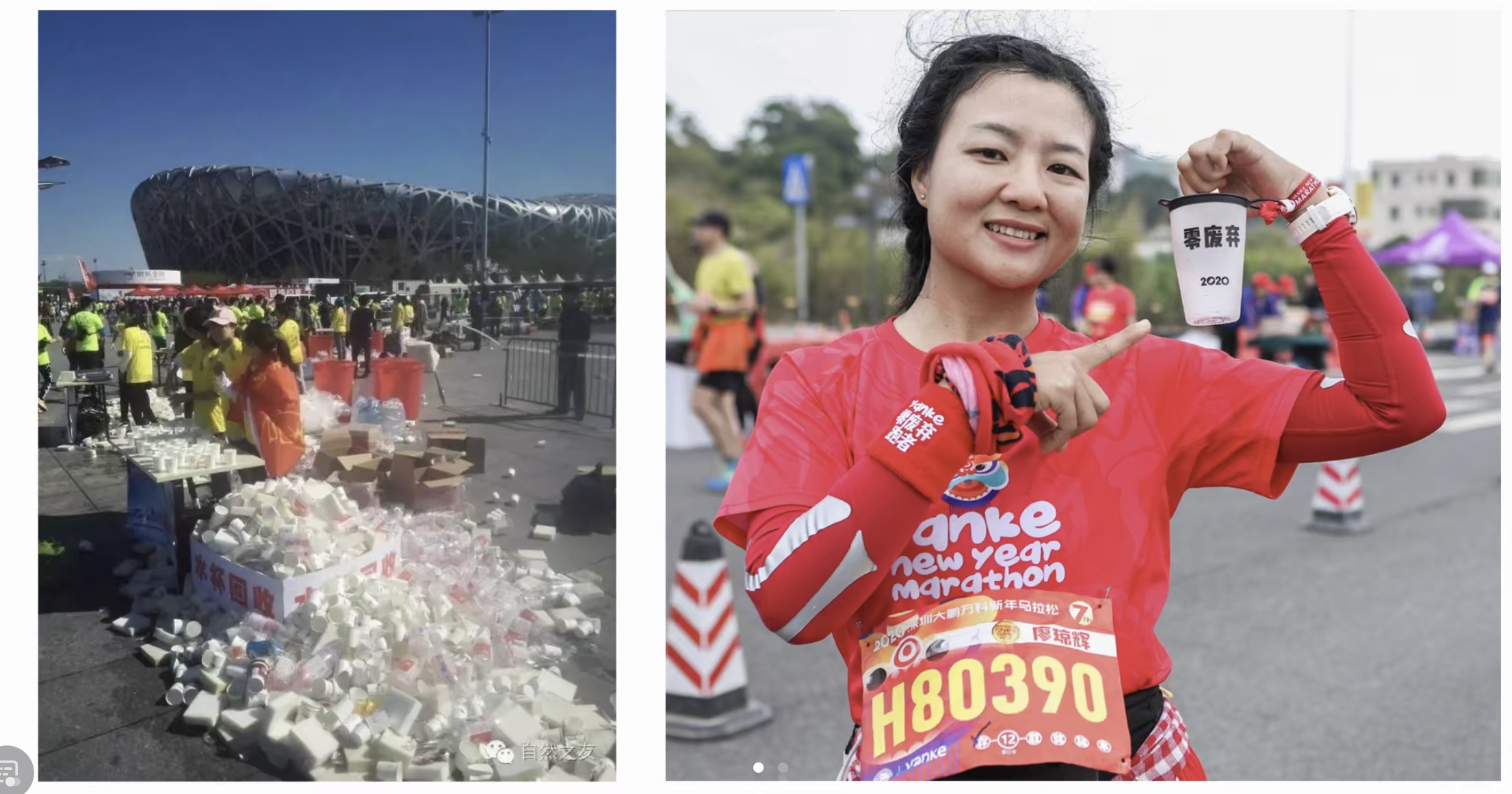
Wu Xiao said that in some marathon events, it is common to see a large number of disposable paper cups that are discarded after use, so they also try to find some alternatives to paper cups, such as distributing collapsible silicone cups to some runners who are willing to practice zero waste, so that they can pass on this environmentally friendly sports culture to more people. "It's not hard to find an alternative, it's hard to set up a system so that it can be recycled later." Wu Xiao said that the important thing in this design is not the distribution of circular cups, but through the system design, adding some incentives or tips so that it can be reused, so as to reduce the use of disposable paper cups.
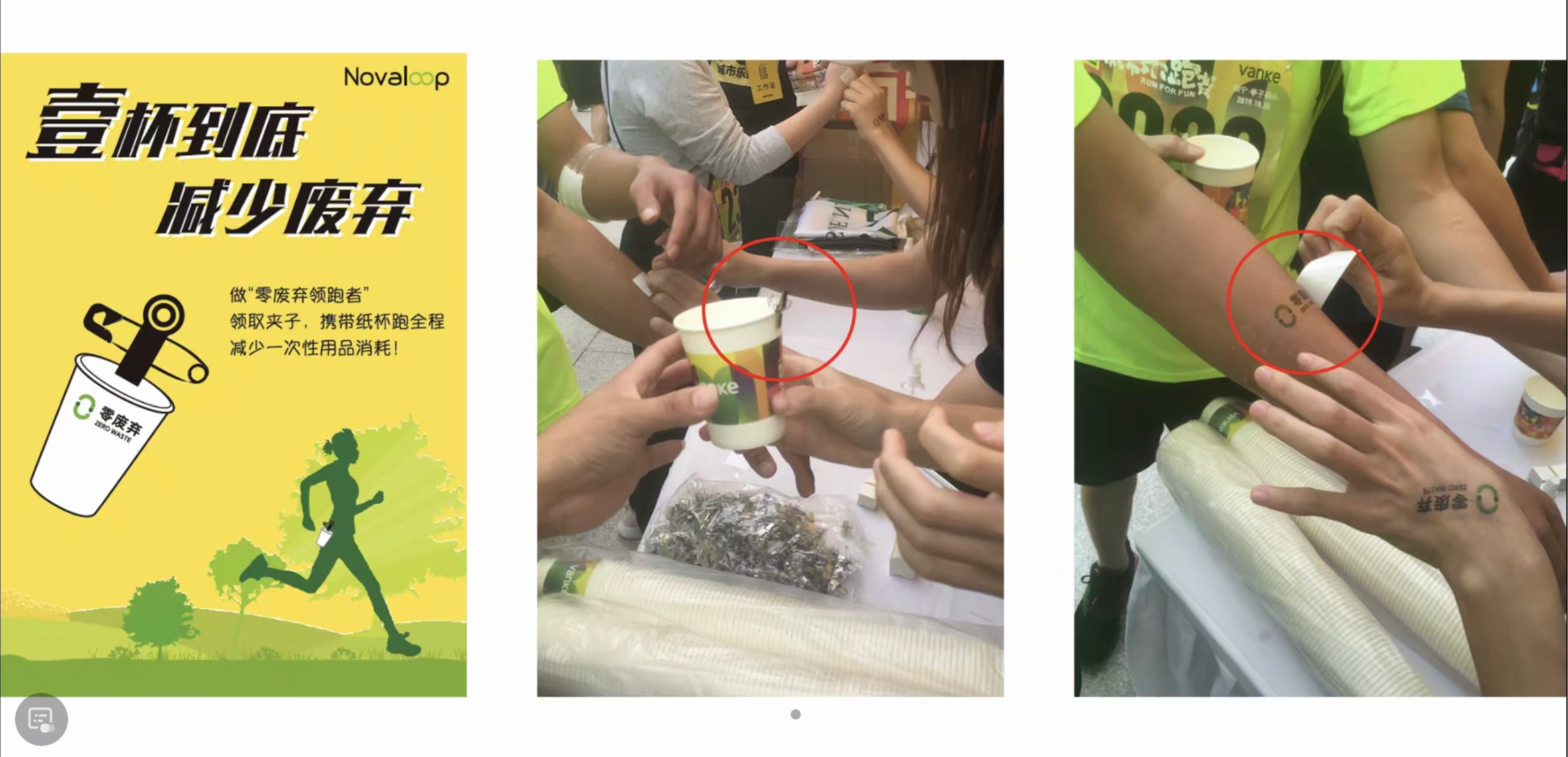
For some races that are difficult to completely replace paper cups, they will also design some programs to encourage everyone to reuse, for example, in short-distance running activities, they will launch the initiative of "one cup to reduce waste", design the paper cup to be pinned to the clothes through clips, and use their own paper cups to drink water in the middle, reduce the consumption of disposable supplies, and award some rewards to these "zero waste leaders" at the end of the line.
Finally, in the recycling link, Wu Xiao said that it is necessary to recycle at the output end, and combine primary and secondary resources to make waste become resources again and re-enter production. Wu Xiao shared some cases of garbage classification that he saw during his research in other countries, such as garbage classification in some countries is very meticulous, and the classification is directional and planned. In the case of plastic bottles, they will ask the public to classify the caps, bottles and labels on the bottles, and there will also be prompt information to tell the public how to dispose of each type and what it is used for.
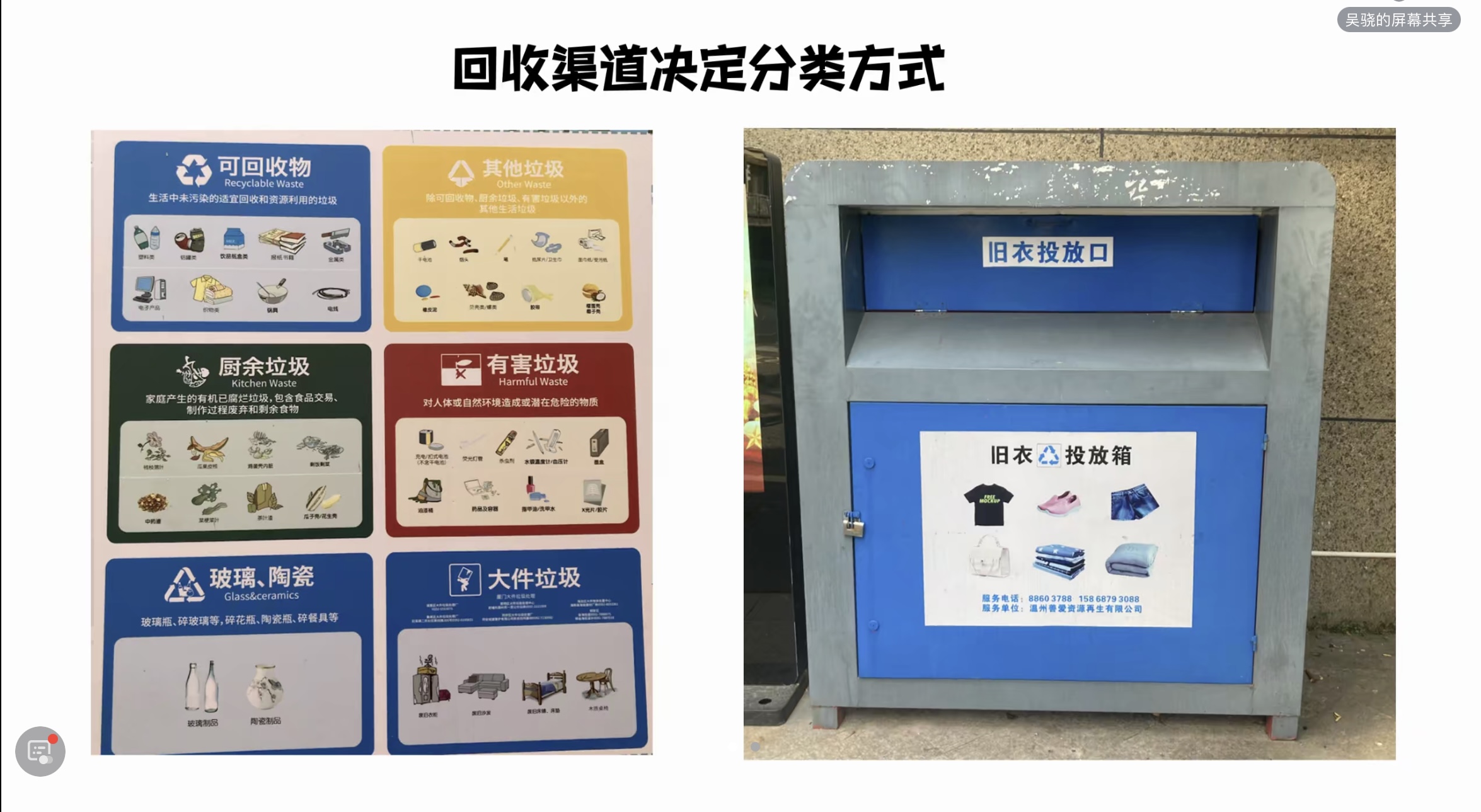
Can these scene designs be used for our reference and use? Wu Xiao said that it can be used for reference, but it needs to be established on the premise of having a certain processing capacity and technology, if we also refine the classification, and there is no recycling channel to process it into a valuable resource after separation, it will not be able to achieve real environmental protection. To avoid this, he said,Garbage sorting is not necessarily better if it is separated, and the recycling channel determines the way of sorting.
Finally, Wu Xiao said that zero waste is not difficult, and we have many opportunities to practice in life, but in addition to life, we also have our own social roles, and we can also introduce the concept of zero waste in combination with our own social roles. For example, as a market organizer, you can design a zero-waste market by reducing the packaging of goods and increasing the use of materials; As the organizer of the event, it can hold zero-waste events by reducing the environmental impact of the event and creating a green participation culture. As a staff member, you can also achieve zero-waste travel through low-carbon travel, bring your own toiletries, reduce the frequency of bedding washing, and so on.


