


"Gutter oil" is transformed into aviation fuel in the sky
According to the Civil Aviation Administration of China, replacing fossil fuels with bio-jet fuel is one of the effective ways to promote the global air transport industry to achieve net-zero carbon emissions by 2050.
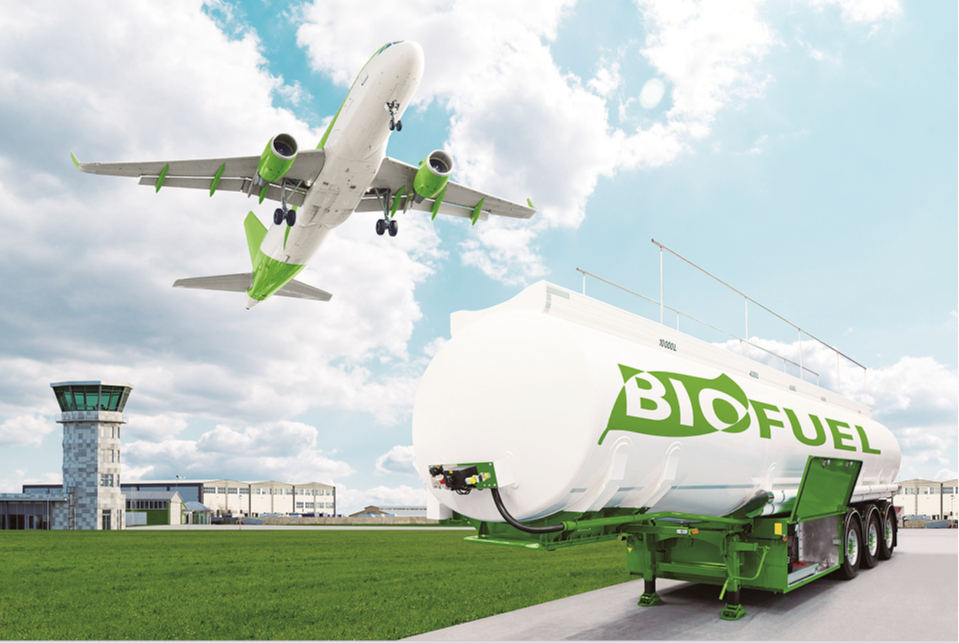
Recently, the bio-aviation fuel produced by Henan Junheng Industrial Group Biotechnology Co., Ltd. (hereinafter referred to as "Junheng Biotechnology") has passed the airworthiness certification of the Civil Aviation Administration of China and can be put into commercial use. Junheng Biotech has also become the first private enterprise in China to obtain the SAF airworthiness certificate.
According to the Civil Aviation Administration of China, replacing fossil fuels with bio-jet fuel is one of the effective ways to promote the global air transport industry to achieve net-zero carbon emissions by 2050. At present, the world's major aviation industry chain enterprises, including Airbus and Boeing, are all in the process of "green" transformation, and it is estimated that by 2030, the market size of bio-jet fuel will exceed 18 million tons, with a value of tens of billions of US dollars.
"It is very difficult for private enterprises to obtain such a high-tech airworthiness certificate. On the whole, the development of domestic bio-jet fuel has just started, and the economic and related technical constraints still need to be solved, and it is more necessary for top-level planning and design and industrial policies to support it. Ji Xing, deputy director of the Special Oil Professional Committee of the China Petroleum and Chemical Industry Federation, said.
The airworthiness certificate is quite golden
Bio-jet fuel is a kind of sustainable biofuel, which uses "catering waste oil" and agricultural and forestry waste as raw materials, and turns it into bio-jet fuel through complex technical processes such as washing, impurity removal, hydrodeoxygenation, and isomerization.
Compared with traditional petroleum-based jet fuel, bio-jet fuel can reduce CO2 emissions by more than 50% throughout its life cycle, and can reach up to 85%. According to Longzhong information data, China's annual aviation fuel consumption will be about 33 million tons in 2023, and if all of them are replaced by bio-aviation fuel, carbon dioxide emissions can be reduced by about 55 million tons a year, which is equivalent to planting nearly 500 million trees, or more than 30 million cars will be stopped for a year.
Different from mineral jet fuel, "gutter oil" has many problems such as many impurities, high acid value, and large salt content, and needs to be continuously cracked, purified, and impurities removed. This makes it several levels more difficult to control the quality index of biojet fuel. Due to the high technical content of bio-jet fuel, only Sinopec Zhenhai Refining & Chemical Co., Ltd. and Junheng Biotech have obtained the airworthiness certificate in China.
"Many 'national team' enterprises have not succeeded, and this time private enterprises have eaten the 'crab' of sustainable biofuels for the first time, which shows that our private enterprises have strong innovation capabilities. ”
At present, China has also kept up with the pace of the global unified market in terms of clean aviation fuel. "In this very cutting-edge industry, our biojet fuel application is almost at the same pace as the international pace. Ji Xing said.
The relevant person in charge of the Airworthiness Certification Department of the Civil Aviation Administration of China said that the participation of Junheng Biotechnology not only ensures the supply of bio-burning coal in the future, but also contributes to the Chinese plan to solve the shortcomings in raw materials, production refining and sustainable certification, and win the initiative in the transformation and development of aviation energy.
Still need to cross the "economic threshold"
The "14th Five-Year Plan" for the green development of civil aviation also clearly states that it will strive to use 50,000 tons of bio-jet fuel by 2025, but this also means that by 2025, China's bio-jet fuel consumption will only account for 0.17% of the total jet fuel.
Not only is the global production of biojet fuel less than 0.2% of the total jet fuel demand, but the price of biojet fuel is higher than that of conventional jet fuel.
"The aviation supply chain has high barriers to entry and stability. As biojet fuel is still in its infancy, the availability of its feedstock, the economics and sustainability of the technology remain major challenges to the commercialization of jet fuel. Ji Xing said.
In Jixing's view, there are two main reasons for restricting the large-scale development of bio-jet fuel: one is the high technical requirements, and the other is the large input cost.
The "high gold content" of the airworthiness certificate means that the technical requirements are high, which also means a higher cost input. Mo Dingge, Secretary of the Party Committee of Sinopec Zhenhai Refining & Chemical Co., Ltd., pointed out that the superposition of a series of costs such as raw material collection, production and transportation has also led to the total production cost of bio-jet fuel at this stage being three to four times that of traditional jet fuel.
"Although it is difficult for the price of bio-jet fuel to compete with traditional jet fuel in a short period of time, with the changes in the international bio-jet fuel market, China's bio-jet fuel market will inevitably change significantly in the future. The use of bio-jet fuel is here to stay, and that's not going to change. Ji Xing said, "I believe that with the policy support, the scale of bio-jet fuel production and use will become larger and larger, and the economy will continue to be highlighted, and the price will gradually decline." ”
Policies still need to be supported
Industry insiders said that the current development of China's bio-jet fuel industry is still in the early stage, to solve the problems of high production costs, difficult supply of raw materials, lack of industrial policy support, etc., from the global countries to develop bio-jet fuel roadmap, policy support is a key step. It is necessary to do a good job in top-level design, strengthen policy support and industrial support at the national level, and guide and promote the acceleration of the construction of a whole industrial chain of bio-jet fuel R&D, production, application and promotion.
"At present, there is no independent national standard for bio-jet fuel, and there is no supporting fiscal, tax and customs policy, and the relevant industrial policies are basically blank. This is like a child with all-round development of morality, intelligence, physical fitness, aesthetics, and labor, who cannot grow up well because of the lack of 'policy rations', which delays the opportunity for development. It is necessary to speed up the improvement of airport bio-jet fuel supporting facilities, introduce relevant application standards, and reduce the cost of bio-jet fuel transportation, storage and refueling. Ji Xing said.
Industry insiders generally say that governments can make up the difference in price for airlines to buy fuel through incentives and compensation mechanisms for environmental benefits. In addition, instead of a single layout of bio-jet fuel, bio-low-carbon energy as the overall layout of the industry can more effectively reduce the cost of bioenergy and improve the profit of the entire industry.
Mo Dingge suggested that China should promote the establishment of the development of the whole industrial chain of bio-aviation coal. On the one hand, local governments should take the lead in improving the waste oil recycling network, strengthen market supervision, and promote regional large-scale collection and centralized treatment; In terms of top-level planning and design and industrial policies, it is necessary to strengthen the medium and long-term planning and targeted support for the bio-jet fuel industry, "such as increasing investment support for bio-jet coal projects through financial funds, green funds, green bonds, green credit and other channels." ”
Ji Xing said that the development of the bio-aviation fuel industry has a high starting point and great difficulty, but it has both social and environmental benefits, and there must be a broad space for development in the future.


