


The carbon sink "ledger" of a green bamboo
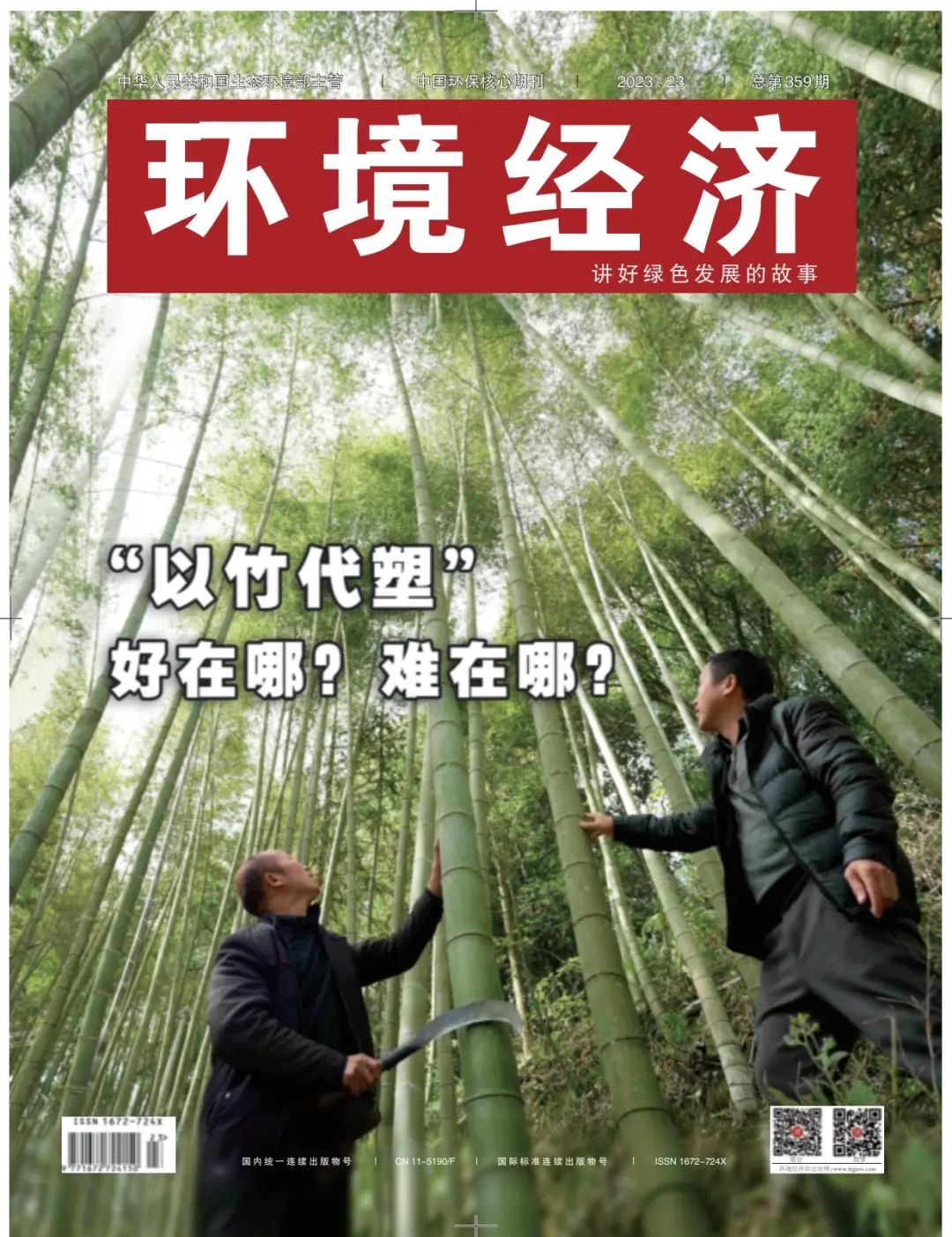
"Fifty miles of Kawahara, half of the bamboo is cultivated. "In the early winter, walking into Anji County, Huzhou City, Zhejiang Province, the eyes are verdant, the surrounding mountains are undulating, the foot of the hillside is full of bamboo forests, the bamboo forests are towering into the clouds, the bamboo leaves are verdant and dripping, the breeze blows through the forest, and the "bamboo sea" is flooded with "green waves".
Anji is China's bamboo township, with 1.01 million acres of bamboo forests, including 870,000 acres of bamboo forests, nearly 50,000 related employees, and has created 20% of the country's industrial output value with 1.8% of the country's bamboo output. However, Anji is also facing the common pain points of the bamboo industry, how to remove the "inefficient" label of the bamboo industry? "Replacing plastic with bamboo" is another innovative work of Anji after the reform of "bamboo forest carbon sequestration". By continuously expanding the value transformation channel of ecological products in the bamboo industry, Anji has achieved five leapfrog developments from selling raw bamboo to entering raw bamboo, from using bamboo poles to using whole bamboo, from physical utilization to biochemical utilization, from primary processing to chain management, from technological breakthroughs to institutional innovation, and the work of "replacing plastic with bamboo" has achieved initial results.
With the advancement of the "double carbon" goal, China has vigorously implemented the reform of bamboo forest carbon sink around the existing bamboo forest resource advantages, and promoted bamboo forest carbon sink trading.
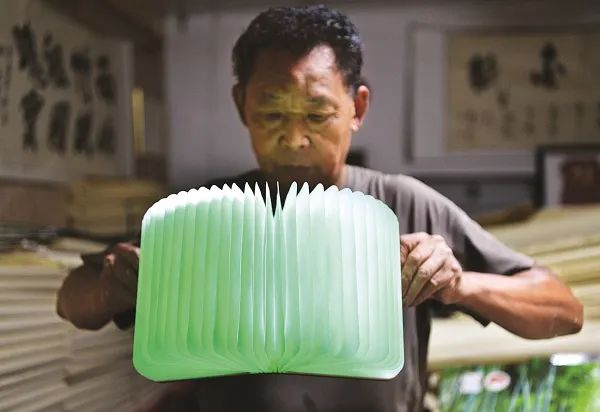
When spring arrives every year, Liu Yanggen, the inheritor of bamboo paper making skills, will start a busy year of work, looking for the best bamboo materials for papermaking in the bamboo forest of Longqi Mountain, Jiangle County, Sanming City, Fujian Province.
Bamboo forests have strong carbon sequestration capacity
The growing problem of plastic pollution threatens human health. Finding alternatives to plastic is an effective way to reduce the use of plastic and reduce plastic pollution, and to solve the problem at the source.
Bamboo may be the material of choice. China is the most abundant varieties of bamboo resources, the longest history of bamboo product production, the most profound bamboo culture of the country, bamboo concentrated in Sichuan, Fujian, Jiangxi, Zhejiang and other 16 provinces, bamboo forest area of more than 7 million hectares, is a natural "reservoir, money bank, grain bank and carbon bank".
Of course, bamboo is versatile, and it can be used as a whole bamboo with almost no waste. Bamboo products are diversified and rich, and more than 10,000 kinds of bamboo products have been developed, involving all aspects of people's production and life such as clothing, food, housing and transportation. From disposable cutlery such as knives, forks, spoons, straws, cups and plates, to household durables, to industrial products such as cooling tower bamboo lattice fillers, bamboo winding pipe galleries and other industrial products, bamboo products can replace plastic products in many fields. Bamboo products maintain a low-carbon or even negative carbon footprint throughout their life cycle. From the perspective of carbon sequestration process, bamboo products have a negative carbon footprint compared to plastic products.
"One of the reasons why we advocate 'replacing plastic with bamboo' is that bamboo can maintain carbon sequestration and low-carbon levels throughout its life cycle. In particular, after the release of the "Three-Year Action Plan for Accelerating the Development of "Bamboo instead of Plastic" (hereinafter referred to as the Three-Year Action Plan), the topic of bamboo carbon sequestration has attracted attention. Gu Guangtong, director of the Institute of Ecological Civilization and the Institute of Ecological Economy of the Institute of Carbon Neutrality of Zhejiang A&F University, a new key professional think tank in Zhejiang Province, told the Environmental Economy that on the one hand, bamboo absorbs carbon dioxide through photosynthesis during the growth process, converts it into carbon elements and stores it in plants, so bamboo forests have strong carbon sequestration capacity. On the other hand, because bamboo grows quickly, has a short growing season, and can be harvested multiple times a year, planting bamboo forests not only helps to reduce the amount of carbon dioxide in the atmosphere, but also stores large amounts of carbon in a stable manner.
"In contrast, traditional plastic products are usually made from fossil fuels such as petroleum, and the oil extraction and manufacturing process produces a large amount of carbon dioxide, and the use of plastic products also produces a large amount of waste, causing serious pollution to the environment. Gu Guangtong said.
Wang Yixiang, director of the Institute of Ecological Civilization and Carbon Neutrality Research Institute of Zhejiang A&F University, a new key professional think tank in Zhejiang Province, told reporters in an interview with Environmental Economy that the negative impact of "microplastics" on the human body and the ecological environment can be alleviated by "replacing plastic with bamboo". Bamboo grows fast and has a strong carbon sequestration capacity, which can reduce greenhouse gas emissions in a variety of ways, and is a carbon absorption "champion".
"Bamboo forests have a strong ability to absorb carbon dioxide, which can reduce carbon emissions in the atmosphere to a certain extent. Specifically, according to relevant studies and estimates, a hectare of bamboo forest can absorb 5.09 tons of carbon dioxide annually, which is 1.46 times that of fir and 1.33 times that of tropical rainforest. This means that planting and protecting bamboo forests can help reduce the amount of greenhouse gases in the atmosphere to a certain extent, which has a positive effect on mitigating climate change.
Fan Shaohui, a researcher at the International Centre for Bamboo and Rattan at the National Forestry and Grassland Administration, has a similar attitude. Fan Shaohui told reporters in an interview with Environmental Economy that bamboo forests have obvious advantages in rapid growth and management compared with other forest types. The area of bamboo forest has shown a rapid increase trend year after year, the timber and rotation cycle of bamboo forest are short, and the bamboo forest will be degraded if it is not operated, the management cost of bamboo forest is relatively low, and the felling of bamboo forest is not affected by the quota. These advantages determine that bamboo forest will become the most suitable afforestation candidate for forestry to mitigate climate change.
According to a INBAR working report, about 5.1 tonnes of carbon (equivalent to 13.6 tonnes of carbon dioxide per year) are sequestered annually by vegetation on one hectare of intensively managed moso bamboo forestland. According to the results of the ninth (2014-2018) forest inventory assessment, the carbon storage of bamboo forests in China is 211 million tons, accounting for 2.6% of the forest carbon storage (9.186 billion tons), and it is expected that the proportion of bamboo forest carbon storage in China will continue to increase in the future. Fan Shaohui told reporters that therefore, bamboo forests have a special position in forest carbon sequestration and increase sinks and respond to climate change. The bamboo forest carbon sink market has great potential.
"Moso bamboo forests and their bamboo products have unique advantages and great potential in carbon sequestration, emission reduction and climate change response, and have been widely recognized by the international community. Wang Yixiang said that the abandonment and expansion of moso bamboo forests directly affect the play of forest carbon sink function in the main moso bamboo producing areas, which in turn will bring many uncertainties to the realization of carbon neutrality in the main moso bamboo producing areas. Vigorously develop bamboo forest carbon sinks, promote the bamboo forest carbon sink collection and storage trading mechanism in Anji County, carry out centralized management in accordance with the methodological standards of bamboo forest management carbon sink projects, and trade on the carbon sink platform, so as to increase the purchase price, mobilize the enthusiasm of bamboo farmers, and increase the income of bamboo farmers, but at the same time to prevent the chaos of "horse racing" in the name of developing bamboo forest carbon sinks.
Gu Guangtong also reminded that the actual amount of carbon reduction is affected by a variety of factors, including the growth of bamboo forests, management methods, climatic conditions, etc. Therefore, for the specific carbon reduction, it is necessary to carry out specific calculations and assessments according to the actual local situation.
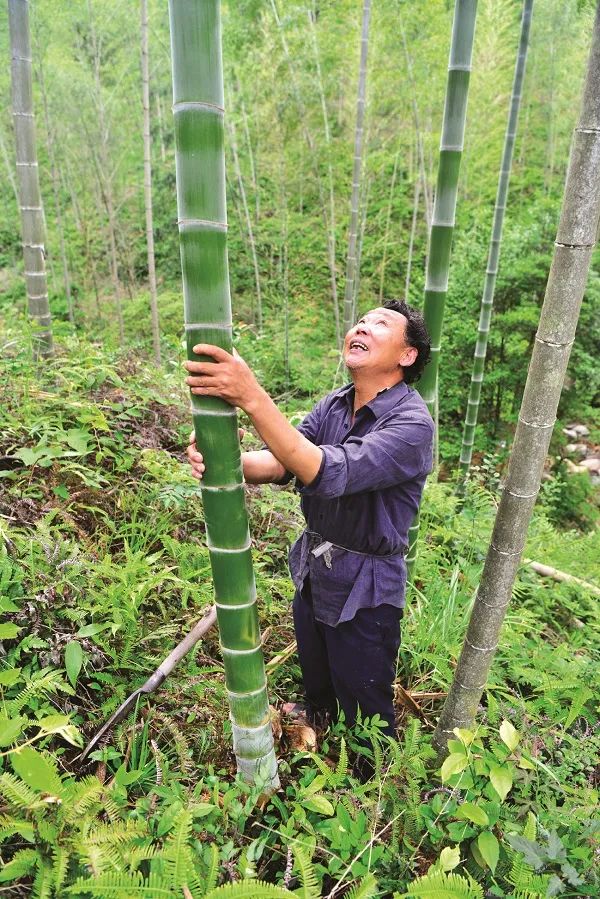
The bamboo forest carbon sequestration market situation is relatively complex
Forest carbon sequestration is an important topic in international climate change negotiations, and it is also an important part of the Chinese government's implementation of greenhouse gas emission reduction. Bamboo forests have great potential in responding to climate change, and are the most suitable type of forest carbon sinks to enter the emission reduction market, because of the lack of corresponding technology, bamboo forest carbon sinks have been difficult to enter the carbon emission reduction market, which has become the biggest bottleneck in the development of bamboo forest carbon sink technology and industry.
Gu Guangtong told reporters that the carbon market is the main policy tool for the global response to climate change. In 2013, the state officially launched local pilot projects for carbon emission trading in Beijing, Shanghai, Tianjin, Chongqing, Guangdong, Hubei and Shenzhen. On July 16, 2021, the national carbon market was officially launched, and forestry carbon sequestration trading also ushered in the dawn of reopening in 2023. Today, although the institutional mechanism of China's forestry carbon sink market still needs to be improved, there is also a long period of exploration at the national and local levels, among which forestry carbon sink projects mainly include the National Certified Voluntary Emission Reduction (CCER) project, the China Green Carbon Foundation (CGCF) independent development project, the Beijing Certified Emission Reduction (BFCER) project, the Guangdong Carbon Generalized System of Preferences certified emission reduction (PHCER) project, and the Fujian Forestry Carbon Sequestration Emission Reduction (FFCER) project. Among them, BFCER, FFCER and PHCER are all limited to trading in their respective provincial carbon markets, and there are different verification and trading rules with obvious localization characteristics.
Gu Guangtong said: "Compared with industrial emission reduction, forestry carbon sinks have a cost advantage. "But in reality, the price of forestry carbon sinks is often lower than the market price of carbon allowances. Judging from the trading price of the national carbon market in early November 2023, the highest carbon emission allowance price in the national carbon market is 82.70 yuan/ton, and the CCER price is expected to reach 68.89 yuan/ton, of which the Beijing carbon market price is relatively high, with the average transaction price of carbon emission allowances reaching 123.77 yuan/ton, and the average transaction price of CCER reaching 70.50 yuan/ton.
"Overall, there is an upward trend in prices. Gu Guangtong told reporters that as of December 19, 2023, the cumulative trading volume of carbon emission allowances in the national carbon market was 432 million tons, with a cumulative turnover of 24.17 billion yuan.
At the same time, Fan Shaohui said that the domestic CCER market was suspended in 2017 due to the failure of the international second commitment period agreement (2013~2020). Sporadic transactions in individual places are not representative and the size of transactions is small. According to the pilot trading market in 2013~2020, the carbon price is about 40 yuan/ton. However, from the perspective of carbon sink prices in the international market, the domestic carbon sink market price is far lower than that in the European market (in February this year, the EU carbon price exceeded 100 euros/ton for the first time, equivalent to about 800 yuan/ton).
In Fan Shaohui's view, after the opening of the CCER market, under the dual influence of China's "double carbon" goal policy and the international market, China's bamboo carbon sink price may usher in an explosive growth.
"The expansion and upgrading of the national carbon market is imminent, and several key emitting industries will be gradually included in the national carbon market, and the total amount of allowances in the national carbon market will be about 10 billion tons in the future. According to a previous report by Yi Carbon, by the end of the 14th Five-Year Plan, the world's largest carbon trading market with a trading volume of more than 100 billion yuan will be built. Gu Guangtong told reporters that in the future, with the expansion of the national carbon market, the demand for CCER will further increase.
It is worth noting that Gu Guangtong told reporters that the market development of bamboo forest as a carbon sink resource is relatively lagging behind, mainly due to the following reasons: First, lack of awareness and awareness. Compared with other carbon sink resources (such as forests), people's awareness and awareness of bamboo forests as carbon sink resources are relatively low. Bamboo forests have good performance in carbon absorption and carbon sequestration, but many people lack understanding of their carbon sink potential and environmental benefits. The technology and industrial chain of planting, management and utilization of bamboo forests are relatively imperfect. The degree of standardization and normalization of planting and management technology is low, and the utilization and product development of bamboo are relatively limited, which limits the market development of bamboo forest as a carbon sink resource. Although bamboo has a variety of uses, such as building materials, furniture, paper, etc., in the carbon market, the demand and market opportunities for bamboo forests as carbon sink resources still need to be further developed. Compared with other carbon sink resources, the policy support for bamboo forest as a carbon sink resource is relatively small. The government's limited policies and incentives in the carbon market and carbon trading, and the lack of specific policy support for bamboo forests as carbon sink resources, also limit the market development of bamboo forests as carbon sink resources.
With the increasing awareness of climate change and environmental protection, as well as the increasing demand for renewable resources, the potential of the bamboo forest carbon sink market will continue to attract attention. In the future, the government, enterprises and society should increase investment and support for the bamboo forest carbon sink market, and establish relevant regulatory policies and market mechanisms to promote the development and expansion of the bamboo forest carbon sink market.
The bamboo forest carbon sequestration methodology is gradually maturing
Bamboo forests occupy a very important position in the world's forest resources and are known as the "second forest". According to the third national land survey, China's bamboo forest area has exceeded 7 million hectares. While the global forest area is declining, the area of bamboo forests is increasing at a rate of 3% per year, which means that bamboo forests are an expanding carbon sink.
The bamboo forest carbon sequestration methodology and trading norms are gradually maturing. From the perspective of history, in October 2013, the "Bamboo Afforestation Carbon Sequestration Project Methodology" was developed.
In December 2015, the "Bamboo Forest Management Carbon Sequestration Project Methodology" and the country's first bamboo forest management carbon sequestration CCER (National Certified Voluntary Emission Reduction) project were developed.
In November 2021, the "Opinions on Accelerating the Innovation and Development of the Bamboo Industry" was released to encourage local governments to build forest and bamboo carbon sequestration trading platforms.
In December 2021, Anji launched the country's first county-level bamboo forest carbon sequestration and storage trading center.
In April 2022, the "Implementation Opinions on Carrying out Green Finance Reform and Innovation to Promote the Pilot Program of Bamboo Forest Carbon Sequestration Trading" was promulgated.
In November 2022, the People's Government of Anji County officially released the first batch of carbon footprint carbon labels for the top ten categories of bamboo products in China.
In August 2023, the first group standard of "Classification and Grading of Bamboo Instead of Plastic Products" in China was released.
On October 19, 2023, China officially restarted the national unified voluntary emission reduction trading market, which is of great significance for China to actively respond to climate change and accelerate the process of carbon peak and carbon neutrality.
On October 24, 2023, the Ministry of Ecology and Environment (MEE) released the methodology for four voluntary greenhouse gas emission reduction projects: afforestation carbon sequestration, mangrove planting, grid-connected solar thermal power generation, and grid-connected offshore wind power. The new methodology integrates the "Bamboo Afforestation Carbon Sequestration Project Methodology" and the "Forest Management Carbon Sequestration Project Methodology", which is applicable to afforestation of trees, bamboos and shrubs, including shelterbelts, special purpose forests, timber forests and other afforestation, excluding afforestation of economic forests, greening of passages on non-forest land, greening of towns and villages and industrial and mining land.
Gu Guangtong told reporters that compared with the old methodology, the new methodology specifically pointed out in the applicable conditions that the project does not remove the original scattered trees and bamboos, and the removal ratio of the original shrubs and bamboos with a DBH of less than 2cm does not exceed 20% of the inland surface area of the project boundary, and the bamboo woodland, ecological public welfare forest, and economic forest have been newly defined, but the entry threshold has hardly changed, and the land qualification and afforestation tending technical requirements are still relatively strict.
"To develop bamboo forest carbon sinks, it is necessary to operate and manage bamboo forests in accordance with the requirements of bamboo forest carbon sequestration methodology, so as to obtain the increment of bamboo forest carbon sequestration, and through the identification of third-party verification agencies, and finally achieve listing and trading. There are two types of methodologies: new afforestation and management management. Fan Shaohui told reporters that each methodology generally includes steps such as carbon pool selection, baseline determination, leakage determination, and net greenhouse gas accounting.
"Among the six methodologies approved in the field of forestry and grassland, there are two methodologies on bamboo, from which it can be seen that bamboo forest carbon sequestration and sink enhancement plays an important role in China's forestry carbon sequestration and increase in response to climate change. Fan Shaohui said that the current bamboo forest carbon sink methodology, not from the perspective of the whole industry chain analysis of bamboo management sink and bamboo products carbon sequestration effect, it is urgent to carry out the systematic management and evaluation of the carbon footprint of the whole industry chain of bamboo resources, through the granting of carbon labels and other measures to open up the growth and selection of bamboo forests, bamboo transportation and processing, bamboo products sales and use until the complete decomposition of all links, to achieve the linkage effect of bamboo forests and bamboo products, in order to maximize the efficiency of the bamboo forest carbon sequestration and sink potential.
"There are some challenges to the bamboo carbon sequestration methodology. Gu Guangtong said that first, the measurement and monitoring of bamboo forest carbon sinks is a complex process. Due to the rapid growth rate of bamboo forests, the process of carbon absorption and carbon sequestration is relatively rapid, and it is necessary to ensure that the changes of carbon sinks are accurately measured and monitored. However, there are some challenges to the management and conservation of bamboo forests, such as the infestation of pests and diseases such as bamboo ants and bamboo rats, and the management of soil quality and water resources. These factors may have a negative impact on the growth and carbon absorption capacity of bamboo forests, and affect the stability of carbon sinks. Bamboo can be used in building materials, furniture, paper and other fields, and different utilization methods may have an impact on the calculation and accounting of carbon sinks. Although the development trend of the carbon market is positive, the cost of manual maintenance of bamboo forests is equivalent to high, the economic incentive mechanism is not perfect, the market recognition is not enough, and a large number of bamboo forests are facing many problems such as abandonment. Fifth, the financial support for bamboo forest carbon sequestration is insufficient. Mainly because bamboo forest carbon sequestration projects require long-term investment support, and there are certain uncertainties and risks, financial institutions may be conservative about the investment in such projects. At the same time, the lack of innovation in financial products for bamboo forest carbon sequestration makes it difficult for financial institutions to accurately assess and price.
In response to these challenges, Gu Guangtong proposed five measures to deal with them. The first is to establish and improve more standardized methods for measuring and monitoring bamboo carbon sinks, including the use of advanced remote sensing technology and ground-based monitoring equipment, to ensure accurate measurement and monitoring of changes in carbon sinks. At the same time, strengthen the training and capacity building of technical personnel, and promote the improvement of carbon sink measurement and monitoring technology; The invasion of pests and diseases such as bamboo rats should improve soil quality and water resource management to improve the health status and carbon absorption capacity of bamboo forests; the third is to encourage the diversified use of bamboo forests and promote their sustainable development as carbon sink resources; the fourth is to promote the market recognition and value assessment of bamboo carbon sinks, participate in carbon trading and carbon markets, strengthen policy support and economic incentives, encourage enterprises and society to participate in the protection and management of bamboo carbon sinks, and improve their economic value and environmental benefits; 。
Chen Zhenliang, director of the Institute of Ecological Civilization and the Institute of Ecological Governance of the Institute of Carbon Neutrality of Zhejiang A&F University, a new key professional think tank in Zhejiang Province, told reporters that bamboo forest carbon sequestration, as a green ecological project, not only involves methodology, but also needs a scientific and reasonable legal framework to regulate and promote its sustainable development. In this process, relevant industrial planning and development and utilization projects also need to comply with laws and regulations on land use control, carbon emission trading, cleaner production, circular economy, solid waste pollution prevention and control, and ecological diversity protection, so as to ensure the steady development of bamboo forest carbon sink projects under the legal framework of ecological civilization.
"Corporate compliance is a new method and strategy for Chinese enterprises to enter the international market and conform to international rules and practices. In Chen Zhenliang's view, at present, the development of bamboo forest carbon sinks needs to pay attention to the legality and standardization of land rights and interests and use planning, the legality and standardization of carbon sink trading, and the legality and standardization of ecological environmental protection.
Chen Zhenliang said: "It is necessary to adhere to the red line of ecological protection, consciously safeguard the national ecological security, ensure that the implementation of the project complies with environmental protection laws and regulations, correctly handle the relationship between protection and development, develop in protection, and promote protection through development." It is necessary to consciously implement the national requirements of industrial ecology and ecological industrialization, give priority to supporting high-quality bamboo products to enter the list of forest ecological label products, and promote the cultivation and development and utilization of bamboo resources as a whole, so as to realize the coordination and unity of industrial development and ecological protection. ”
Introduce financial revitalization and revitalize bamboo forest resources
To open the code of bamboo forest, the "green bank", it is inseparable from the key of green finance. Endowing bamboo forests with financial attributes of carbon sequestration means transforming the ecological benefits of bamboo forests into a tradable financial asset, which is of positive significance for environmental protection and carbon emission reduction.
Bamboo forests are mainly distributed in poor areas of the old and young, and there is a proverb that "bamboo forests are friends of the poor". Bamboo carbon sinks are endowed with financial attributes and can be used as collateral as assets, revitalizing bamboo forest resources, thus providing bamboo forest owners with the possibility of investment and expansion of production.
"At present, the investment income of bamboo forest management is low, resulting in the serious phenomenon of bamboo forest abandonment, so the proportion of low-yield bamboo forest is relatively large. Fan Shaohui told reporters that the bamboo forest carbon sink is endowed with financial attributes, which can increase the income of bamboo farmers, stimulate the enthusiasm of bamboo farmers for operation and management, and then improve the carbon sequestration and sink potential of bamboo forests and realize the high-quality development of bamboo forests.
After the bamboo forest carbon sink is endowed with financial attributes, financial products can be designed and derived, so that the bamboo forest carbon sink has better investment and trading attributes. For example, in the practice of bamboo forest carbon sequestration trading, Zhejiang Anji has launched carbon sequestration co-prosperity loans for village collectives and farmers, carbon sequestration loans for enterprises to enjoy interest rate reductions after purchasing foreign exchange, and carbon sequestration storage and loans for platforms, and at the same time introduced "carbon sequestration price index insurance" to escort the income of carbon sequestration trading.
For another example, in October 2022, Guizhou's first bamboo forest carbon ticket, the Chishui Danqing carbon ticket, was successfully issued, and the bank used the carbon ticket as collateral and granted 50 million yuan to the company for the development of bamboo forest carbon sinks. The Danqing carbon ticket issued this time is based on the development of 100,000 acres of bamboo forest, which has been calculated to sequester more than two tons of carbon per mu, and can sequester 1.04 million tons of carbon during the five-year period of 2016~2020, worth 50 million yuan.
"The launch of the 'Bamboo Forest Carbon Ticket' is a positive attempt to help transform the ecological benefits of bamboo forests into economic benefits, and encourage more investors and enterprises to participate in bamboo forest protection and planting. Gu Guangtong told reporters that this practice will help promote the development of carbon sink projects, promote carbon emission reduction and ecological environmental protection. At the same time, it will also help promote the development of the carbon trading market and provide financing support and development opportunities for more ecological protection projects.
Gu Guangtong said that the ecological benefits of bamboo forests have been transformed into economic benefits, providing a new economic model for the protection and management of bamboo forests, and providing a market-oriented mechanism for exploring the realization of the ecological value of bamboo forest carbon sinks. Specifically, the financial attributes of forest carbon sequestration have the following significance:
First, it is conducive to encouraging ecological protection. Converting the carbon sink of bamboo forests into financial assets can provide economic incentives for the ecological protection of bamboo forests. This incentive mechanism is helpful to enhance the awareness of bamboo forest protection and promote the effective protection and management of the ecological environment in the protected area.
Second, it is conducive to promoting sustainable management. Giving bamboo forests the financial attributes of carbon sequestration can provide economic support for the sustainable management of bamboo forests, encourage more scientific management and protection measures, and improve the ecological benefits of bamboo forests.
Third, it is conducive to improving the economy of ecological benefits. By converting the ecological value of bamboo forests into financial assets, it helps to improve the economic degree of ecological benefits of bamboo forests, and provides new economic support for the ecological protection and sustainable development of bamboo forests.
Fourth, it is conducive to promoting the development of the carbon trading market. Converting bamboo forest carbon sinks into financial assets will help promote the development and expansion of the carbon market, and provide financing support and development opportunities for more ecological conservation projects.
Fifth, it is conducive to promoting rural revitalization and green common prosperity. On the one hand, it can increase economic income: through carbon sink projects, it can bring additional economic income to mountainous towns and towns, increase local fiscal revenue, and provide financial support for the revitalization of rural economy; on the other hand, promote farmers' income: carbon sink projects help to improve the income level of local farmers, and obtain income through planting and management of bamboo forests, which is conducive to farmers' income; and promote the development of green industries: the implementation of carbon sink projects will help promote the development of green industries, provide more employment opportunities for local people, and promote the green and sustainable development of the local economy。 And improve the ecological environment: carbon sequestration projects help to improve the local ecological environment, enhance the attractiveness of rural tourism, promote the development of eco-tourism, increase local tourism income, and at the same time, promote the development of public utilities: the income brought by carbon sequestration projects can be used for infrastructure construction, environmental protection and social development in mountainous towns and villages, and improve the overall development level of the local area.
Gu Guangtong bluntly said that although the financial attributes of bamboo forest carbon sequestration have brought new opportunities for the management and protection of bamboo forests, the development and management of carbon sequestration projects need to strictly comply with relevant certification standards and regulatory regulations, strengthen supervision and regulation in the process of promotion, and prevent potential risks to ensure their legitimacy and sustainability.
Chen Zhenliang further explained that from the perspective of strengthening policy guarantees and optimizing management services, it is necessary to further improve the bamboo industry and products, the utilization of whole bamboo and the standard system and quality management system of bamboo building materials, and improve the quality evaluation and traceability system of bamboo products. Accelerate the promotion of standardized production, and vigorously promote the management of origin identification, the barcode system of origin and the application of bamboo forest certification and identification. Establish a sampling inspection mechanism for the quality and safety of major bamboo products, and guide and supervise bamboo enterprises to implement product quality and safety production responsibilities. From the perspective of rule of law guarantee, in the future, it is necessary to strengthen the standardization and improvement of the financial attributes of bamboo forest carbon sinks, establish and improve laws and regulations, strengthen cross-departmental collaborative supervision and joint law enforcement, promote the implementation of policies and systems, strengthen industry self-discipline and social supervision, explore ecological justice + carbon sink compensation mechanisms, and strengthen international cooperation and exchanges. Only in this way can we better promote the healthy development of the bamboo forest carbon sink market in accordance with the law and achieve sustainable ecological, economic and social development.


